
Quick answer: Dry skin on dogs may appear as flakes, a dull coat, itching, redness, or small scabs. Start with gentle grooming and bathing, avoid harsh products, and contact a veterinarian if the skin is painful, infected, persistently itchy, or getting worse.
Key takeaways
- Dry skin can be caused by environment, grooming habits, allergies, or medical conditions.
- Over-bathing and harsh products can make the skin worse.
- Use dog-formulated products and follow label directions.
- Persistent dryness, odor, hair loss, or severe itching needs veterinary evaluation.
Who this guide is for
This guide is for owners who want a practical daily routine for mild dryness, flaking, or a dull coat.
It is not for diagnosing infection, allergies, hormonal disease, or other medical conditions.
Signs of dry skin in dogs
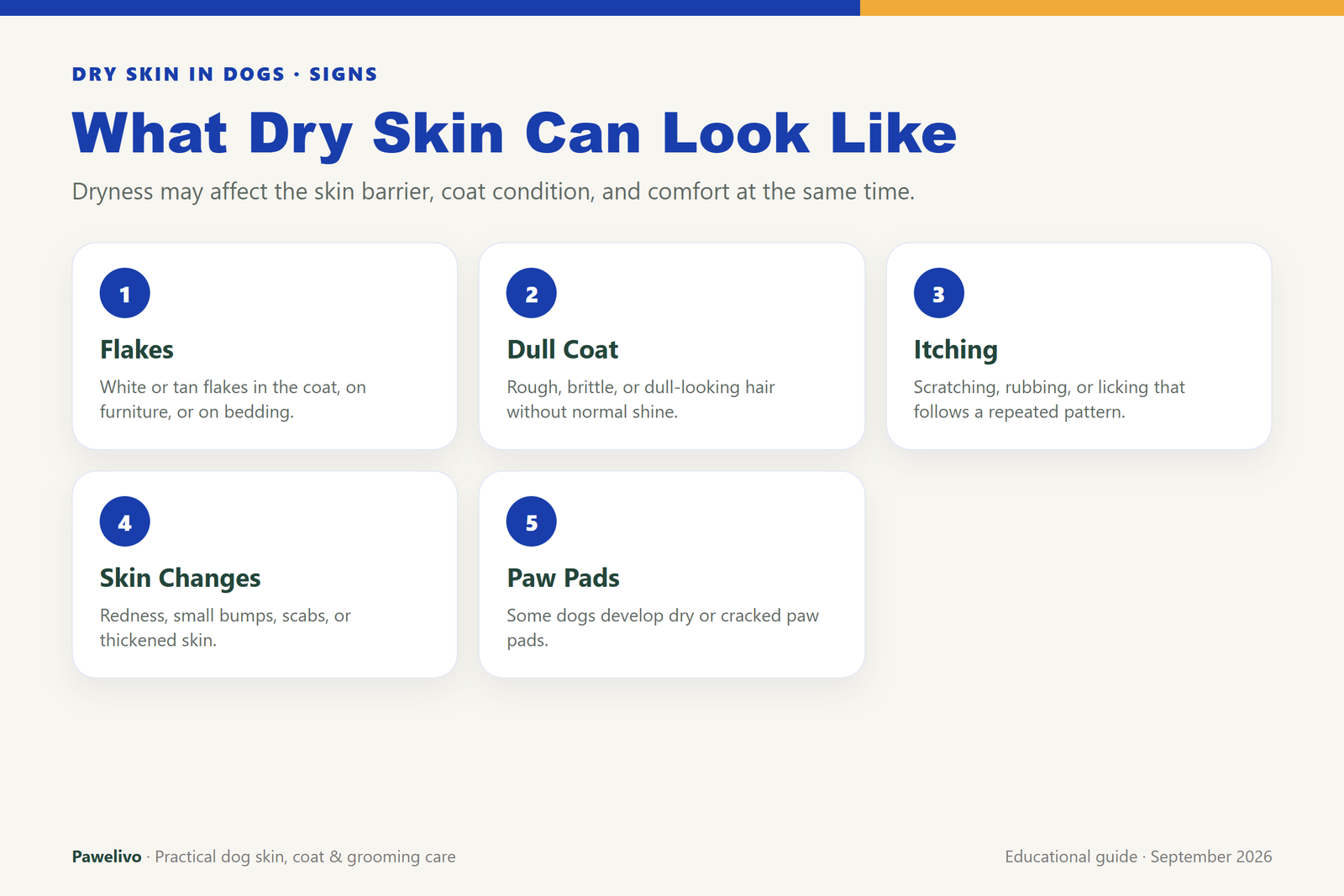
- White or tan flakes in the coat or on bedding.
- Dull, rough, or brittle-looking coat.
- Frequent scratching, licking, or rubbing.
- Redness, small bumps, scabs, or thickened skin.
- Dry or cracked paw pads in some dogs.
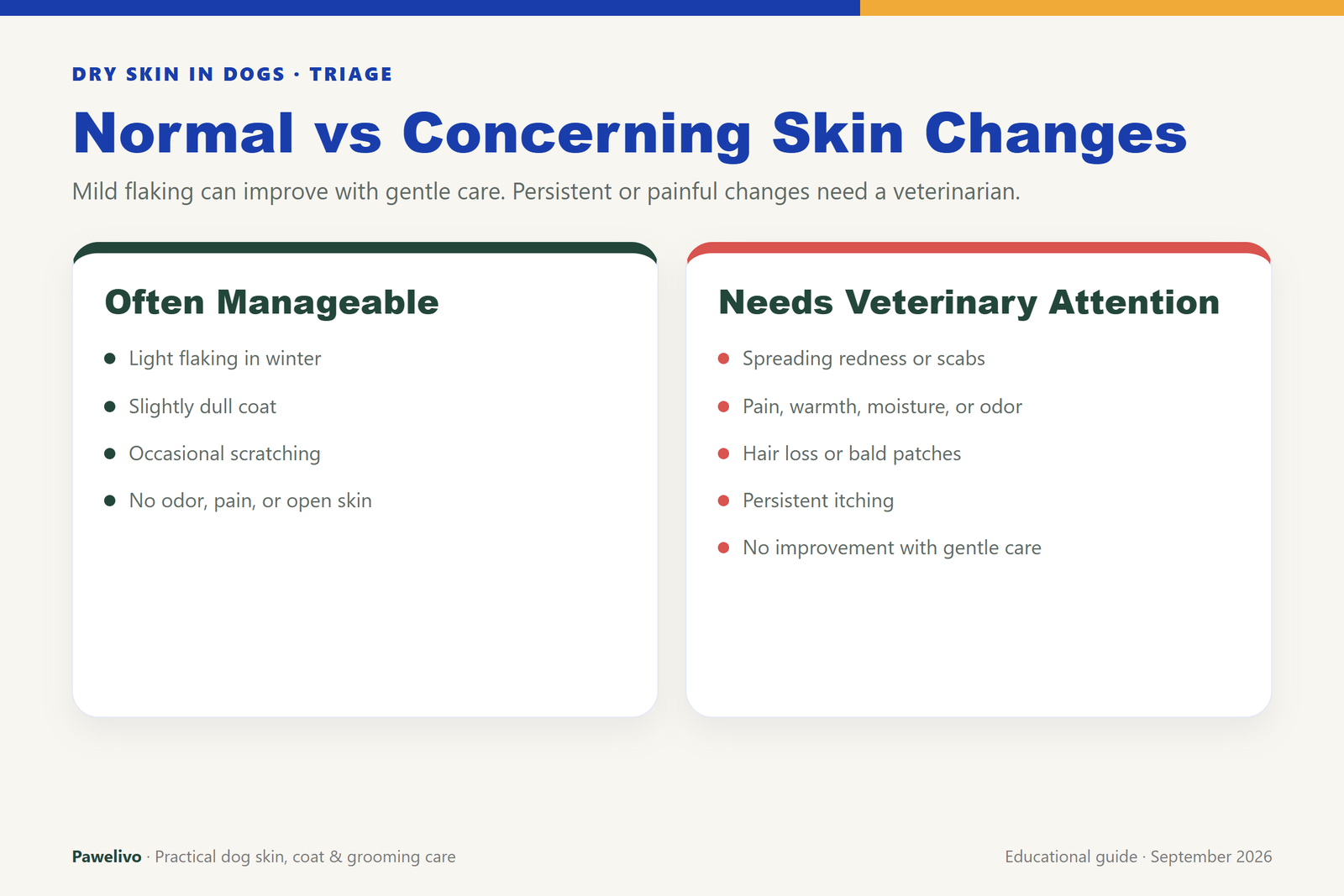
Normal vs concerning skin changes
| Skin change | May be mild | Needs veterinary attention |
|---|---|---|
| Light flaking in winter | Possible dryness or environment | If it persists or spreads |
| Dull coat | Grooming or nutrition factor | If accompanied by weight or energy changes |
| Occasional scratching | Mild irritation | If it becomes frequent or severe |
| Redness or scabs | Possible irritation | If painful, warm, moist, or spreading |
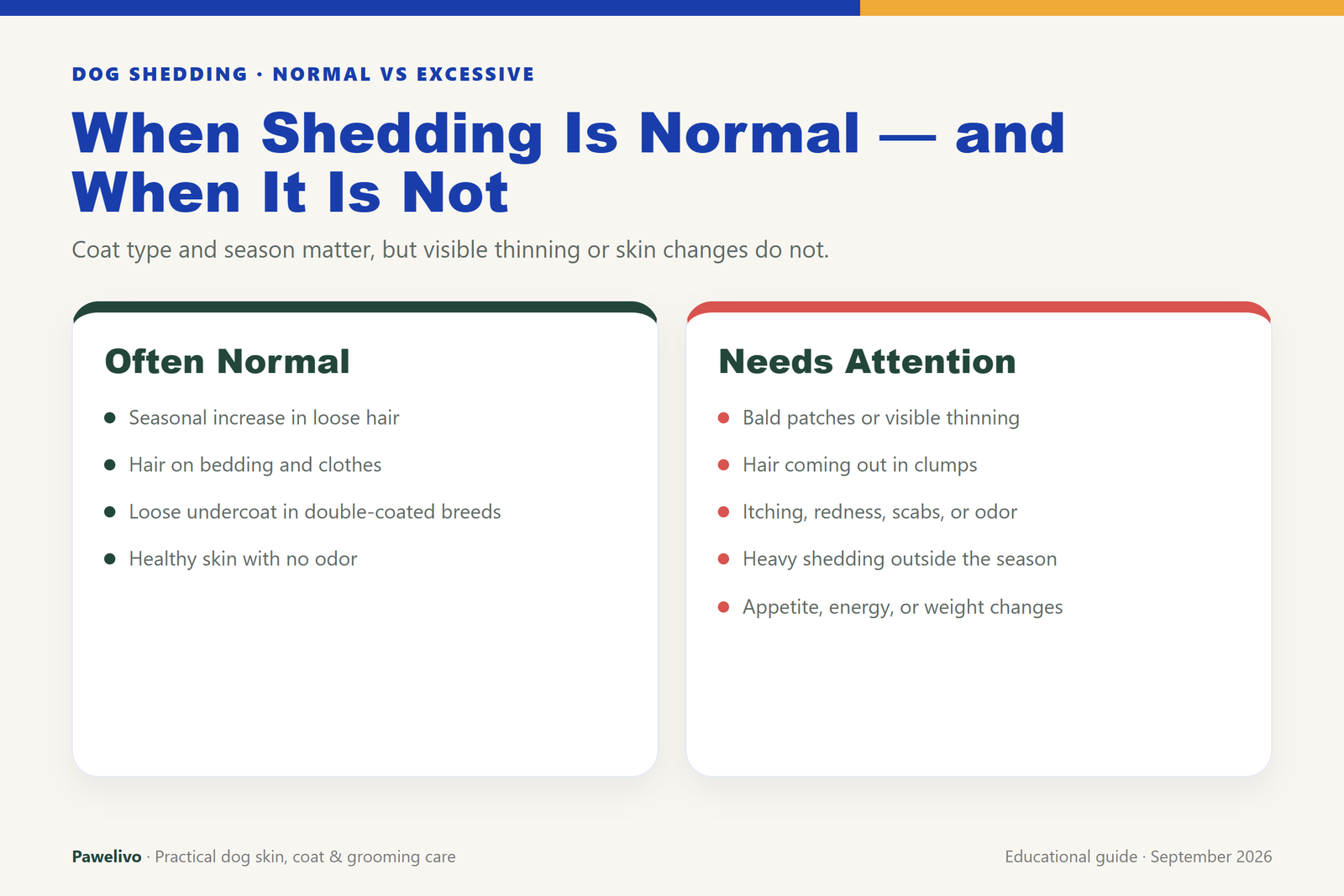
| Hair loss | Coat transition or grooming | If accompanied by bald patches or skin disease |
Common causes and contributing factors
| Factor | What to look for | Practical response |
|---|---|---|
| Environment | Dry indoor air, cold weather, heating | Reduce irritants and support the coat |
| Bathing and grooming | Over-bathing, hot water, harsh shampoo, incomplete rinsing | Bathe less aggressively and rinse completely |
| Allergies and skin disease | Itching, redness, recurrent infections | Ask a veterinarian to evaluate the pattern |
| Parasites | Fleas, mites, or other skin pests | Follow an appropriate prevention plan |
| Nutrition and health | Dull coat, weight changes, digestive signs | Do not make major diet changes without veterinary advice |
How to build a gentle daily routine
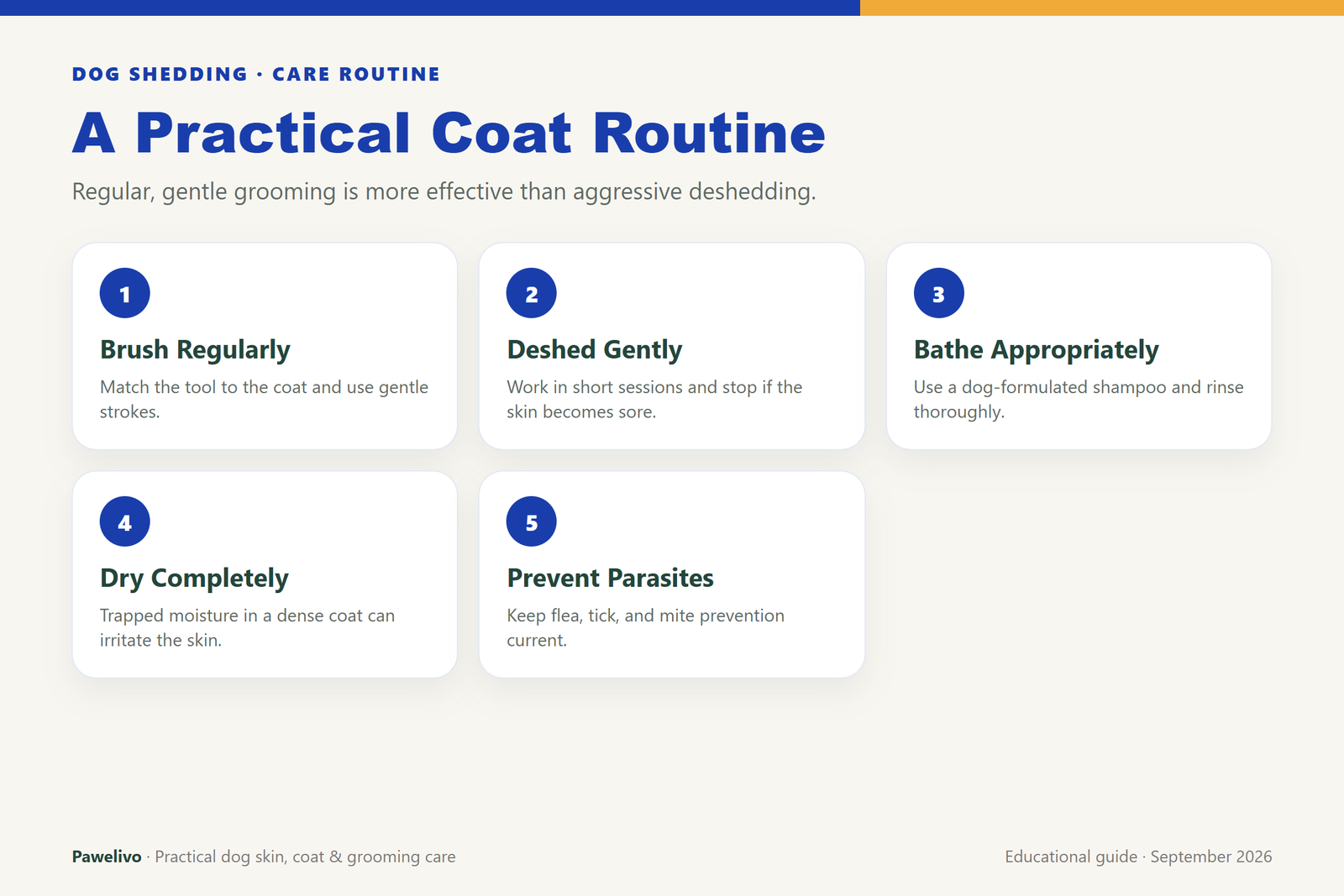
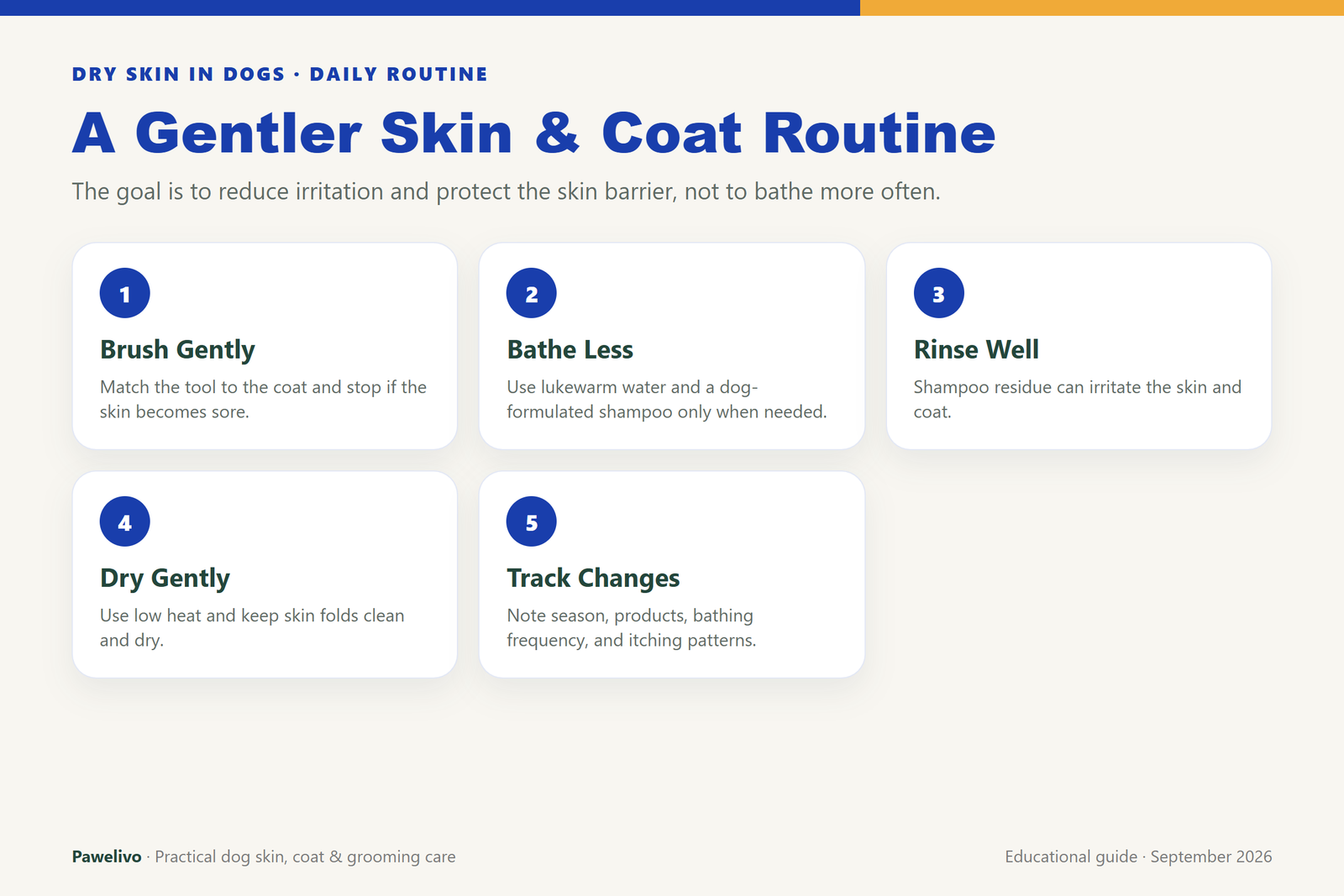
- Brush gently. Use a tool that suits your dog’s coat and stop if the skin becomes sore.
- Bathe less aggressively. Use lukewarm water and a dog-formulated shampoo only when needed.
- Rinse completely. Shampoo residue can irritate the skin and coat.
- Dry gently. Pat or use a low-heat dryer and keep skin folds clean and dry.
- Protect the coat. Avoid harsh cleaners, fragrances, and laundry products.
- Track changes. Note season, bathing frequency, products, and itching patterns.
What to avoid
- Human shampoo, dish soap, and heavily fragranced products.
- Bathing more often without a specific reason or veterinary plan.
- Applying human lotions, oils, or essential oils to the coat.
- Using medicated shampoo without a diagnosis or label instructions.
- Assuming every flake is simple dryness when infection or allergy may be present.
When to contact a veterinarian
Contact a veterinarian if the skin is red, painful, swollen, oozing, or foul-smelling; if your dog is losing hair; if itching is severe or prevents rest; or if the problem does not improve with gentle care.
Product types to discuss
| Product type | Purpose | Important note |
|---|---|---|
| Gentle dog shampoo | Routine bathing | Use only as directed and rinse well |
| Dog conditioner | Coat manageability | Choose a product suitable for your dog’s coat |
| Parasite prevention | Reduce fleas and mites | Follow your veterinarian’s plan |
| Veterinary treatment | Treat infection, allergy, or inflammation | Requires a diagnosis |
FAQ
Can I use coconut oil on my dog’s dry skin?
Do not apply oils or human products unless your veterinarian recommends them. Some products can irritate the skin or cause digestive problems if licked.
How often should I bathe a dog with dry skin?
There is no single schedule for every dog. Bathe only as needed, use a gentle dog shampoo, and follow veterinary advice if the skin is inflamed.
Is dry skin always a grooming problem?
No. Allergies, parasites, infection, nutrition, and hormonal disease can also affect the skin and coat.
Can I use human lotion on my dog?
No. Human lotions may contain ingredients that are unsafe if licked or absorbed.
Do fish oil supplements help dry skin?
Some dogs may benefit, but supplements should be discussed with a veterinarian because dose, health status, and interactions matter.
What if my dog has flakes and a bad smell?
Odor can suggest infection or another skin problem. Have your dog examined rather than relying on shampoo alone.
Related guides
Sources
This article is educational and does not replace veterinary advice. Last updated September 28, 2026.