
Quick answer: Sensitive skin means a dog reacts more easily to products, environment, or allergens, but it is not a diagnosis. Use gentle, dog-formulated products, avoid strong fragrances and harsh bathing, and contact a veterinarian if redness, itching, odor, hair loss, or recurrent irritation persists.
Key takeaways
- Sensitive skin can be a pattern of reactions, not a specific disease.
- Fragrance, over-bathing, incomplete rinsing, laundry products, allergies, and parasites are common triggers.
- Gentle routines and product label directions matter more than frequent bathing.
- Skin infections and allergies can look like simple sensitivity.
- Persistent or painful skin changes need veterinary evaluation.
What does sensitive skin look like in dogs?
- Redness, itching, rubbing, licking, or recurrent paw and ear irritation.
- Flaking, bumps, scabs, or a dull coat.
- Irritation after bathing, grooming, or contact with bedding.
- Repeated reactions to new shampoos, conditioners, or laundry products.
- Odor, moisture, or thickened skin when infection is present.
Common triggers of sensitive skin
| Trigger | What you may notice | Practical response |
|---|---|---|
| Fragrance or harsh ingredients | Redness or itching after grooming | Use a simple dog-formulated product and follow the label |
| Over-bathing or hot water | Dryness, irritation, or a dull coat | Bathe only when needed with lukewarm water |
| Shampoo residue | Itching or irritation after bathing | Rinse thoroughly and dry gently |
| Laundry or household products | Irritation around the bedding area | Reduce fragrance and choose gentle cleaning methods |
| Allergies | Seasonal or year-round itching, licking, and ear problems | Track patterns and ask a veterinarian about evaluation |
| Parasites or infection | Itching, scabs, odor, hair loss, or moist skin | Needs diagnosis and appropriate treatment |
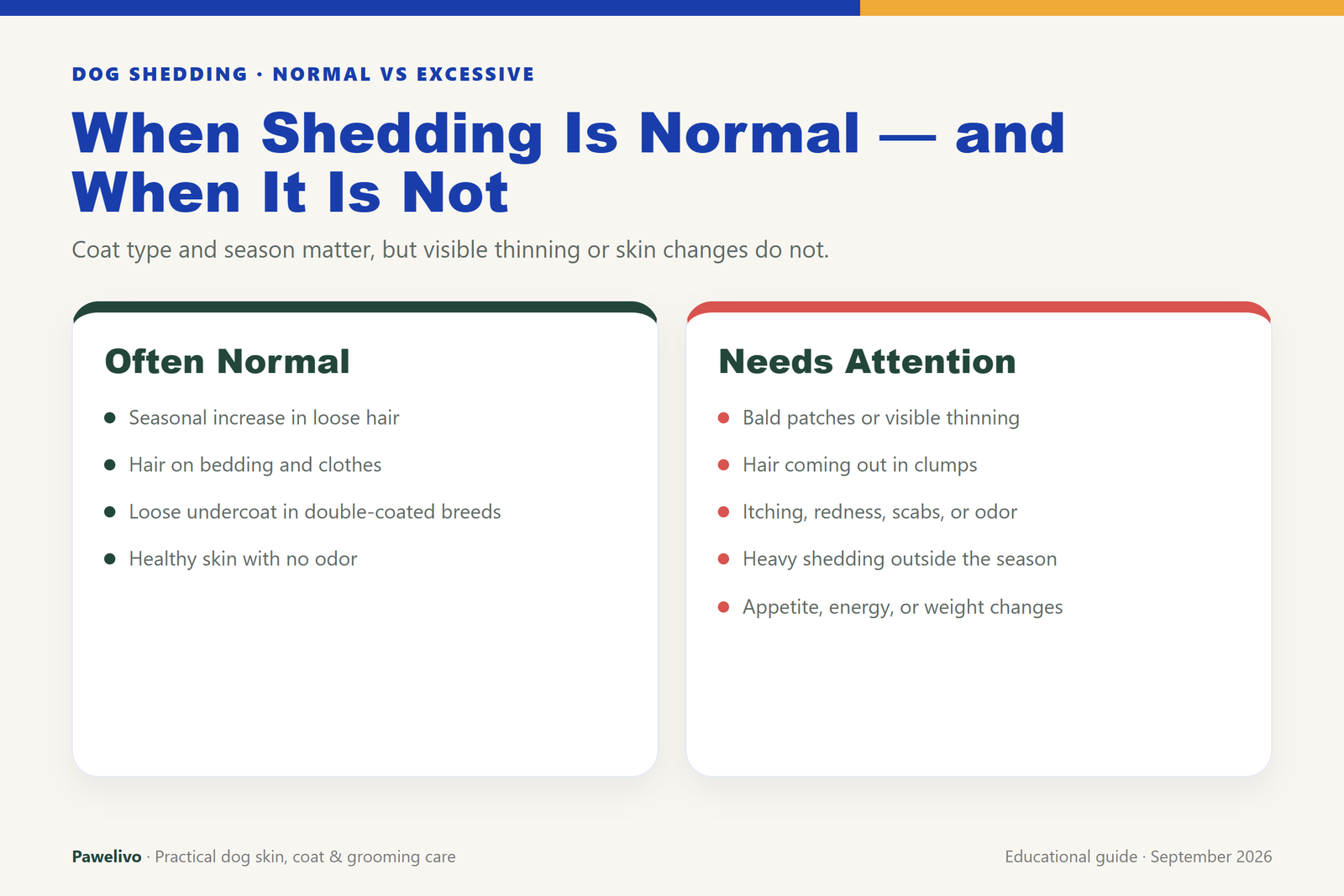
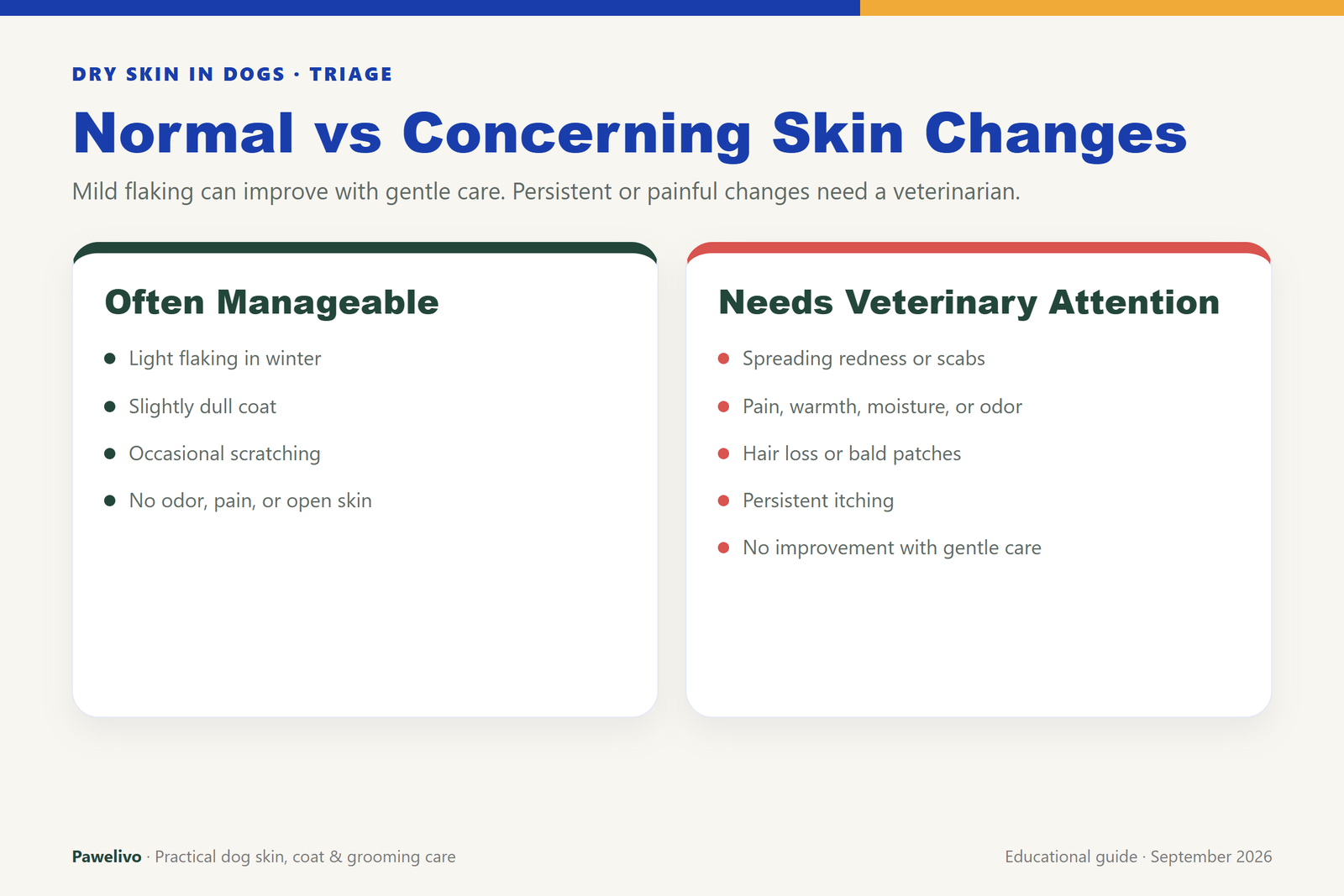
Normal changes vs signs that need attention
| Change | May be mild | Needs veterinary attention |
|---|---|---|
| Occasional scratching | Mild irritation | If it becomes frequent or prevents rest |
| Light flaking | Possible dryness | If redness, odor, or hair loss appears |
| Minor reaction after grooming | Possible product irritation | If it spreads or does not settle |
| Licking paws | Occasional grooming | If paws are red, swollen, or stained |
| Skin odor or moisture | Not routine | Often suggests infection |
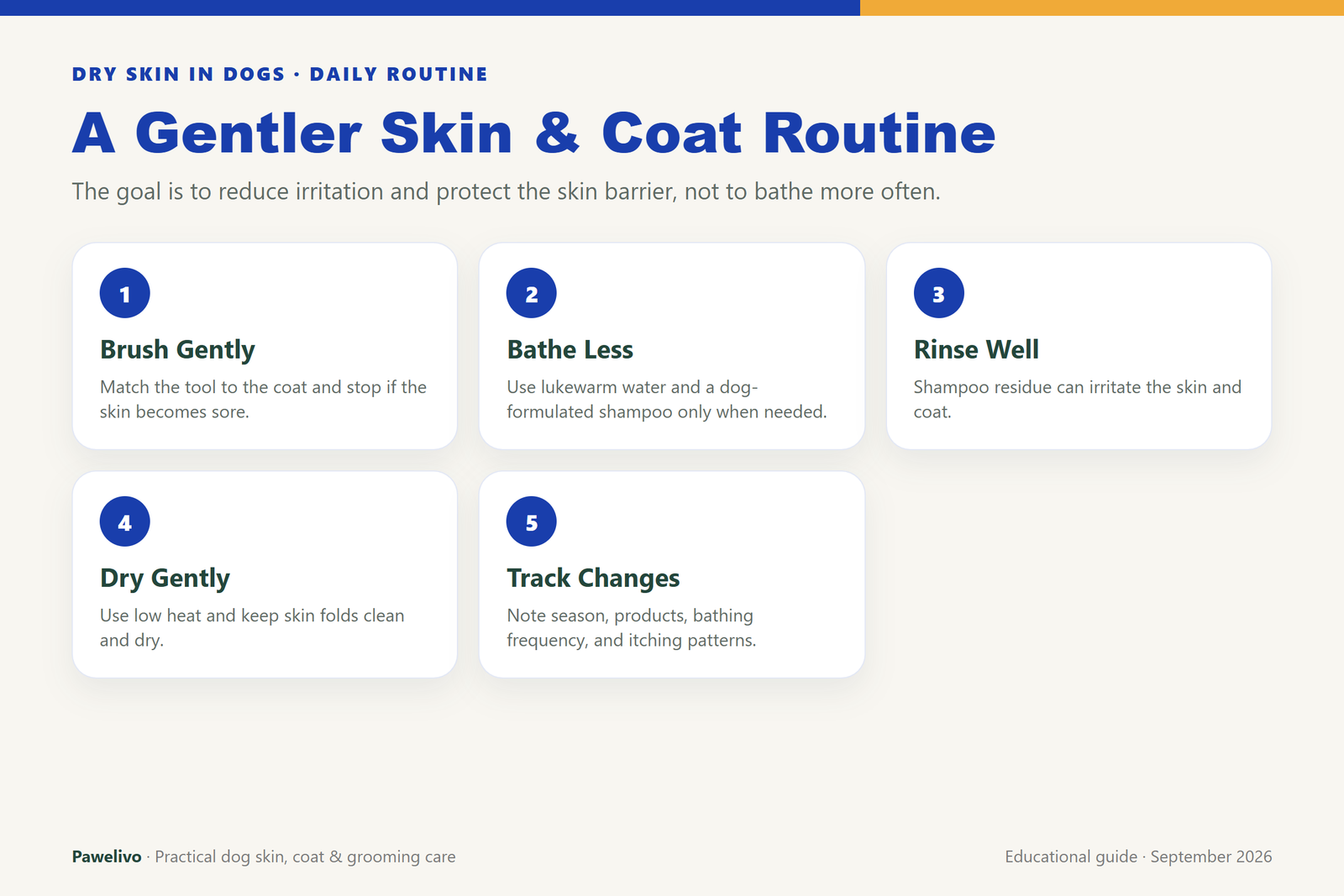
How to build a gentle routine
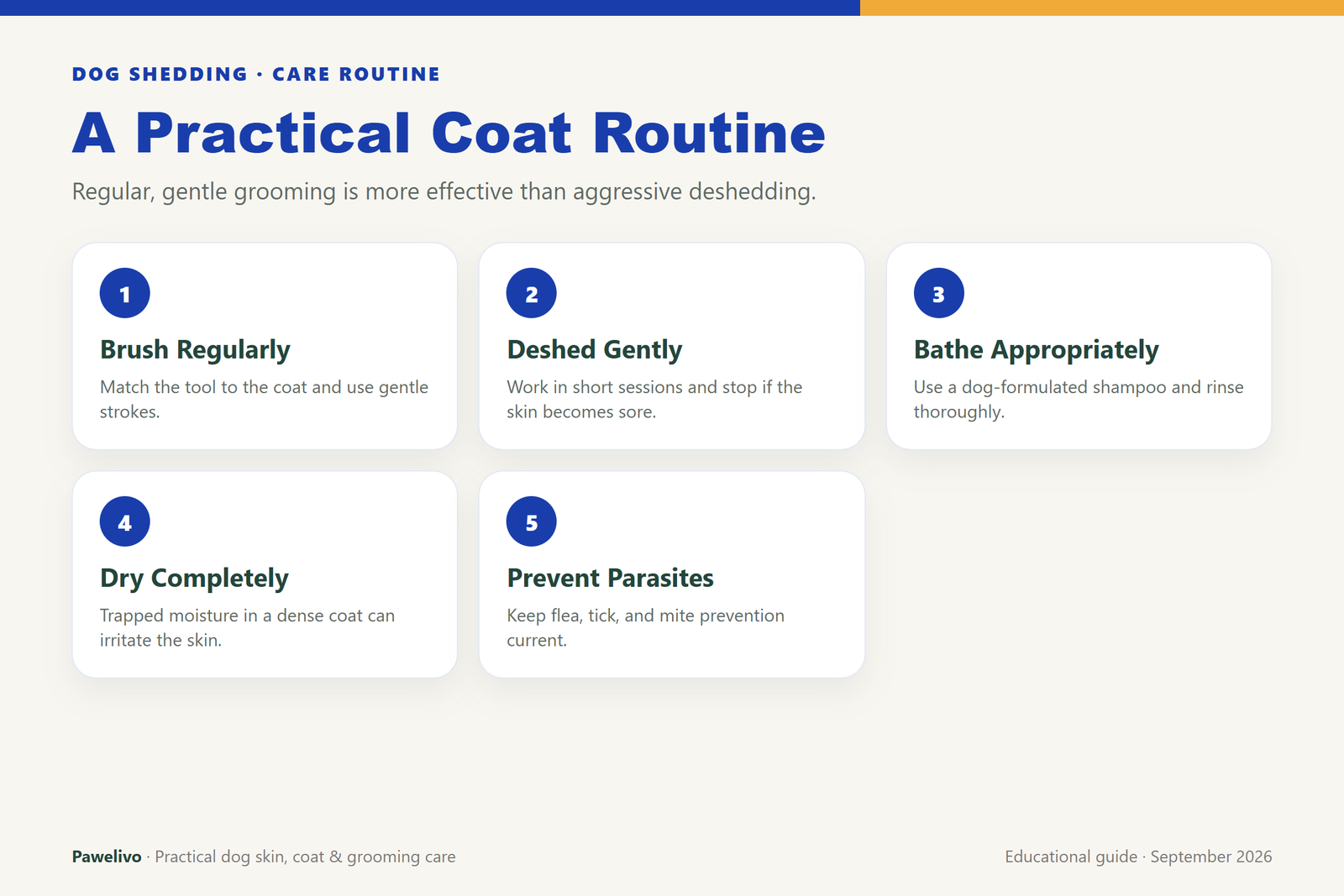
- Brush gently. Use a soft tool that suits the coat and stop if the skin becomes sore.
- Bathe less aggressively. Use lukewarm water and a dog-formulated shampoo only when needed.
- Rinse completely. Residue can irritate the skin and coat.
- Dry carefully. Use low heat and keep skin folds clean and dry.
- Introduce one product at a time. Record the date and any reaction.
- Reduce environmental irritants. Use gentle laundry products and avoid strong fragrances.
- Keep parasite prevention current. Follow the plan recommended for your dog.
How to choose dog grooming products
- Choose a product intended for dogs and the specific skin or coat need.
- Read the label for directions, warnings, and contact time.
- Avoid assuming that “natural” or “hypoallergenic” means no reaction is possible.
- Do not use human shampoo, dish soap, or products made for another species.
- Stop using a product if it causes redness, pain, swelling, or worsening itching.
What not to do
- Do not apply human creams, essential oils, or leftover medication.
- Do not use medicated shampoo without a diagnosis or label directions.
- Do not bathe repeatedly to “dry out” irritated skin.
- Do not change food or supplements without veterinary advice.
- Do not assume every reaction is an allergy.
When to contact a veterinarian
Contact a veterinarian if the skin is painful, swollen, oozing, foul-smelling, or spreading; if your dog is losing hair; if itching interferes with sleep; or if a reaction does not improve after you remove the suspected irritant.
FAQ
Is sensitive skin the same as allergies?
No. Sensitive skin describes a tendency to react easily. Allergies, infections, parasites, and other conditions can cause similar signs.
Can I use baby shampoo on my dog?
Do not use human shampoo unless a veterinarian specifically recommends it. Dogs have different skin pH and may react to ingredients or fragrance.
How often should I bathe a dog with sensitive skin?
There is no single schedule for every dog. Bathe only when needed, use a gentle dog-formulated product, and follow veterinary advice if the skin is inflamed.
Should I switch food immediately?
No. Diet changes should be planned with a veterinarian, especially if an elimination trial is being considered.
Related guides
- Dog skin care guides
- Sensitive skin in dogs
- How to bathe a dog
- Best dog shampoo for sensitive skin
- Dog Skin & Coat Quiz
Sources
- Merck Veterinary Manual: Itching (Pruritus) in Dogs
- Merck Veterinary Manual: Skin Disorders of Dogs
- AVMA: Grooming Tips for Dogs
- ASPCA: Dog Grooming Tips
This article is educational and does not replace veterinary advice. Last updated September 28, 2026.