
Quick answer: Nighttime itching may seem worse because your dog has fewer distractions, lies against bedding, or is exposed to dry air, dust mites, or another allergen. Check the skin, record when and where the itching happens, and keep bedding clean. Persistent, severe, or painful itching should be evaluated by a veterinarian.
Key takeaways
- Nighttime scratching is a pattern to investigate, not a diagnosis.
- Bedding, dry indoor air, allergies, parasites, infections, and pain can all contribute.
- A short video and a written log can help your veterinarian identify the pattern.
- Do not use human creams, essential oils, or leftover medication without veterinary advice.
- Open skin, severe itching, swelling, pain, or breathing difficulty needs prompt veterinary care.
Why does nighttime itching seem worse?
Dogs can itch at any time of day, but the behavior may become more obvious when the house is quiet. During the day, play, walks, meals, and other activity can distract your dog. At night, your dog may focus more on the sensation.
Several factors can also make irritation more noticeable:
- Bedding and dust: Dust mites, detergent residue, or a bedding material may irritate sensitive skin.
- Dry indoor air: Heating and low humidity can make the skin feel drier.
- Allergens: Pollen, dust, mold, or food-related reactions can cause persistent itching.
- Parasites: Fleas, mites, and other skin pests can cause intense itching that may disturb sleep.
- Infection or pain: Yeast, bacteria, injury, or another painful condition can make your dog lick or scratch at night.
What should you check tonight?
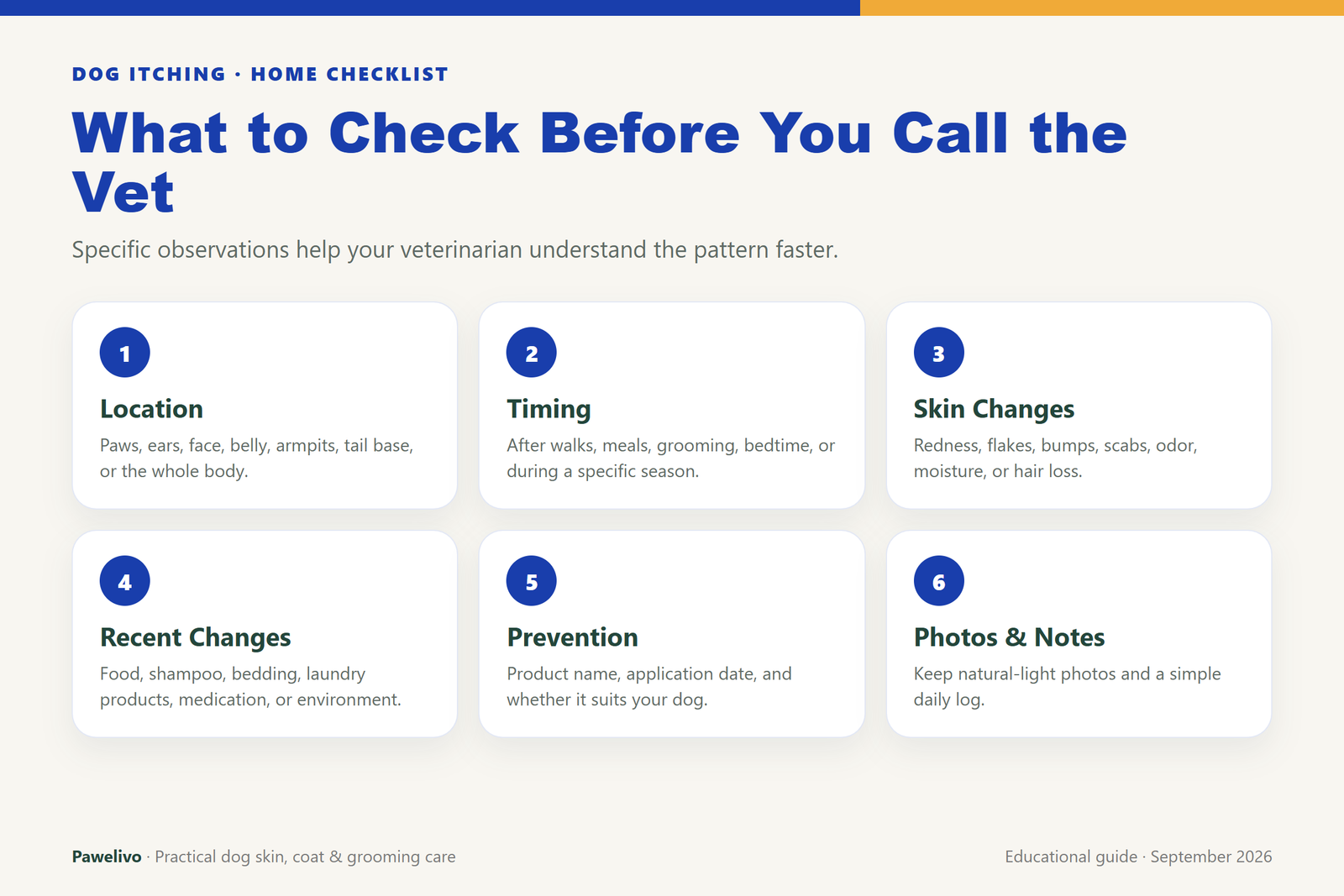
- Timing: Note whether itching starts after dinner, at bedtime, overnight, or after a specific activity.
- Location: Check the paws, ears, face, belly, armpits, flanks, and tail base.
- Skin changes: Look for redness, flakes, bumps, scabs, moisture, odor, or hair loss.
- Bedding and laundry: Record the last wash date and whether the detergent or bedding changed.
- Environment: Check for dust, damp areas, strong fragrances, heating, or a recent move.
- Parasite prevention: Confirm the product, application date, and whether it is appropriate for your dog.
- Video: Record a short clip of the behavior without disturbing your dog.
Keep the observations factual. “Scratched the left ear for two minutes at 11:30 p.m.” is more useful than guessing the cause.
Normal scratching vs a concerning pattern
| Pattern | May be mild | Needs veterinary attention |
|---|---|---|
| Occasional scratch after a walk | Possible irritation or normal grooming | If it becomes frequent or intense |
| Scratching at night | May be a temporary trigger | If it happens most nights |
| Licking paws or ears | Occasional grooming | If it is repetitive, moist, or painful |
| Flakes or dull coat | Possible dryness or grooming issue | If redness, odor, scabs, or hair loss appear |
| Open skin or swelling | Not routine | Needs professional assessment |
How to reduce nighttime irritation safely
- Refresh the sleeping area. Wash bedding with a gentle, fragrance-free detergent and dry it completely.
- Reduce airborne irritants. Dust surfaces, ventilate the room, and avoid strong candles, sprays, or diffusers.
- Check the skin gently. Do not scrub, pick at scabs, or apply human creams.
- Use dog-formulated products only. Follow label directions for shampoo or grooming products.
- Keep parasite prevention current. Use the plan recommended for your dog and the local risk.
- Prevent licking when practical. A clean, properly fitted recovery suit or cone may reduce trauma, but it does not treat the cause.
- Schedule a veterinary visit. Bring your notes, photos, product names, and medication history.
What not to do
- Do not give human antihistamines, steroids, pain medicine, or anti-itch creams without veterinary advice.
- Do not apply essential oils or homemade mixtures to the skin.
- Do not repeatedly bathe with medicated shampoo without instructions.
- Do not change the diet based only on nighttime scratching.
- Do not assume fleas are absent just because you cannot see them.
When to contact a veterinarian
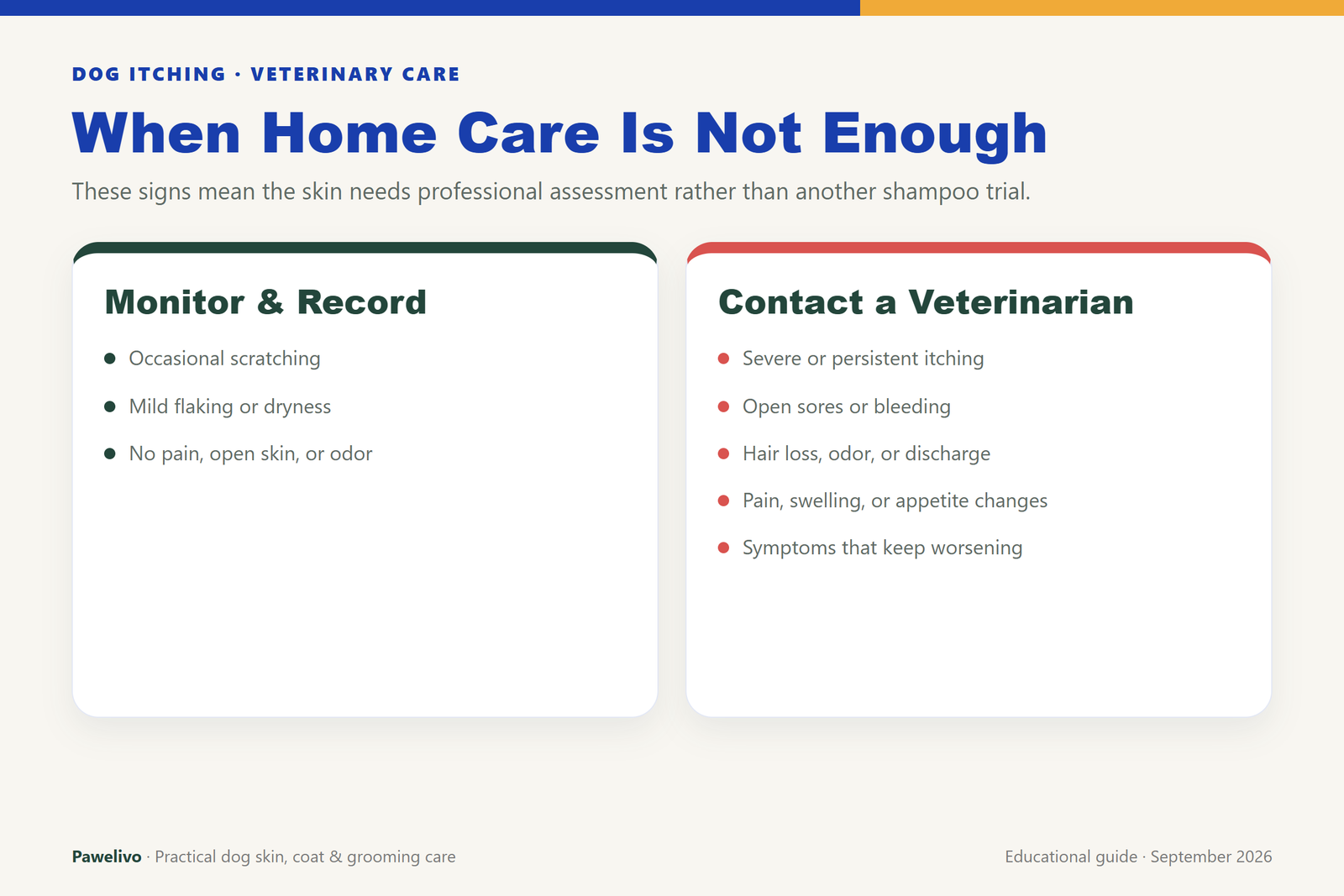
Contact a veterinarian if your dog:
- Scratches or licks for long periods most nights.
- Has open sores, bleeding, swelling, hair loss, odor, or discharge.
- Seems painful, restless, or unable to settle.
- Has recurring ear or paw problems.
- Stops eating, vomits, has diarrhea, or behaves differently.
Seek emergency care for breathing difficulty, collapse, severe swelling, or another emergency sign.
FAQ
Why does my dog itch more at night?
There is no single reason. Less distraction, bedding, dry air, allergens, parasites, infection, and pain can all make itching more noticeable at night.
Can dry air cause nighttime scratching?
Dry air can contribute to skin discomfort, but it does not rule out allergies, parasites, or infection.
Should I bathe my dog every night for itching?
No. Frequent bathing can worsen dry or irritated skin. Follow a veterinarian’s advice and the product label.
Can I give my dog an antihistamine?
Only if a veterinarian specifically recommends it for your dog. The wrong medication or dose can be harmful.
Related guides
Sources
- Merck Veterinary Manual: Itching (Pruritus) in Dogs
- Merck Veterinary Manual: Skin Disorders of Dogs
- AVMA: Pet Owner Resources
- ASPCA: Dog Grooming Tips
This article is educational and does not replace veterinary advice. Last updated September 28, 2026.