

Quick answer: Some shedding is normal, but heavy shedding can increase during seasonal coat changes or be related to coat type, stress, parasites, skin disease, nutrition, or another health problem. Persistent hair loss, bald patches, itching, or skin changes should be evaluated by a veterinarian.
Key takeaways
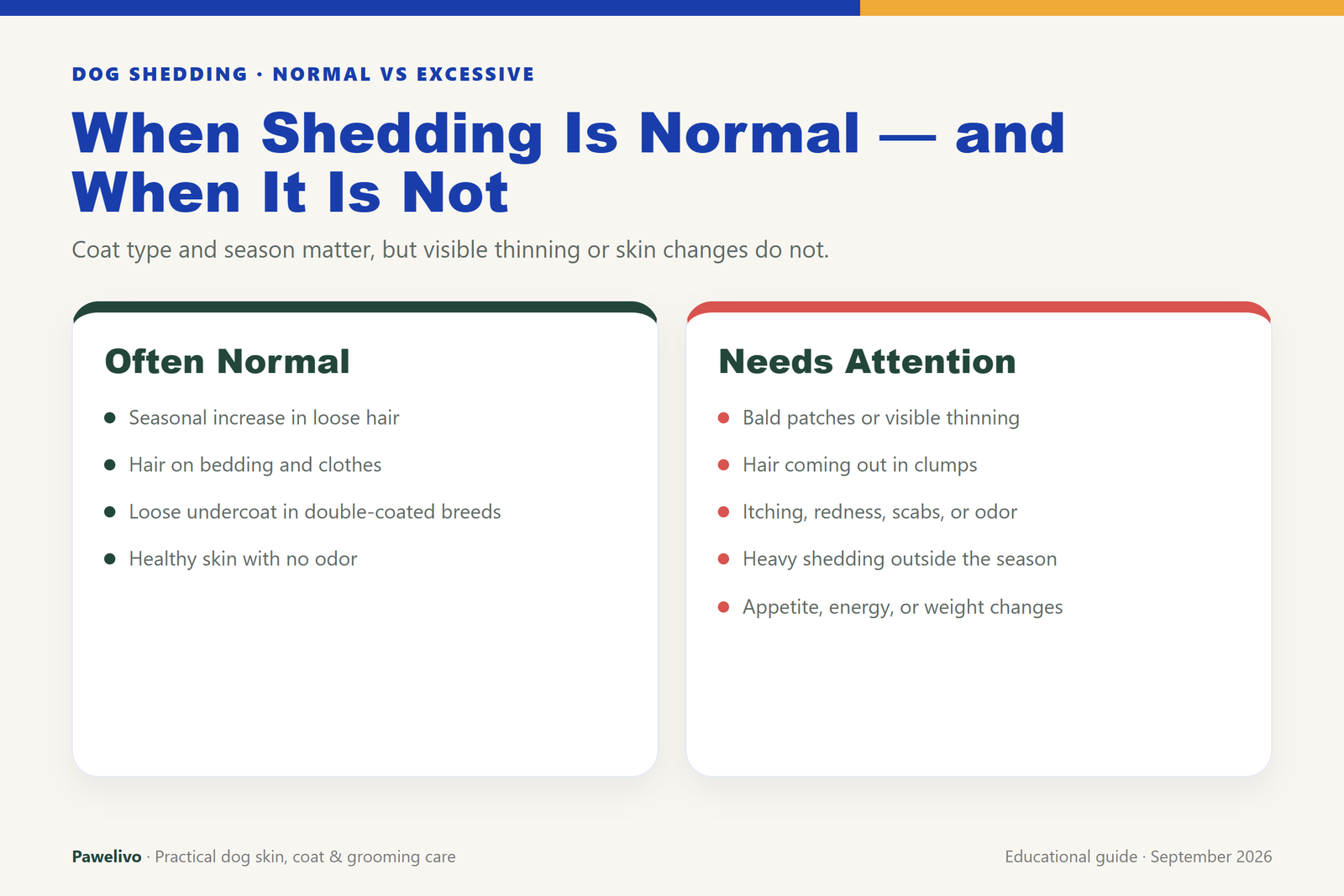
- Shedding is normal for many breeds and often changes with the season.
- Double-coated breeds can shed heavily during coat transitions.
- Do not shave a double-coated dog without professional advice.
- Hair loss with itching, redness, odor, or bald patches is different from normal shedding.
Normal vs excessive shedding
| Pattern | May be normal | May need veterinary attention |
|---|---|---|
| Seasonal increase in loose hair | Yes | If it continues heavily outside the season |
| Hair on bedding and clothes | Often normal | If the coat is visibly thinning |
| Small amount of loose undercoat | Common in double-coated dogs | If clumps appear with skin irritation |
| Bald patches or thinning coat | No | Needs evaluation |
| Shedding with itching or odor | No | May indicate skin or health disease |
Common reasons dogs shed heavily
| Cause | What you may notice | What to do |
|---|---|---|
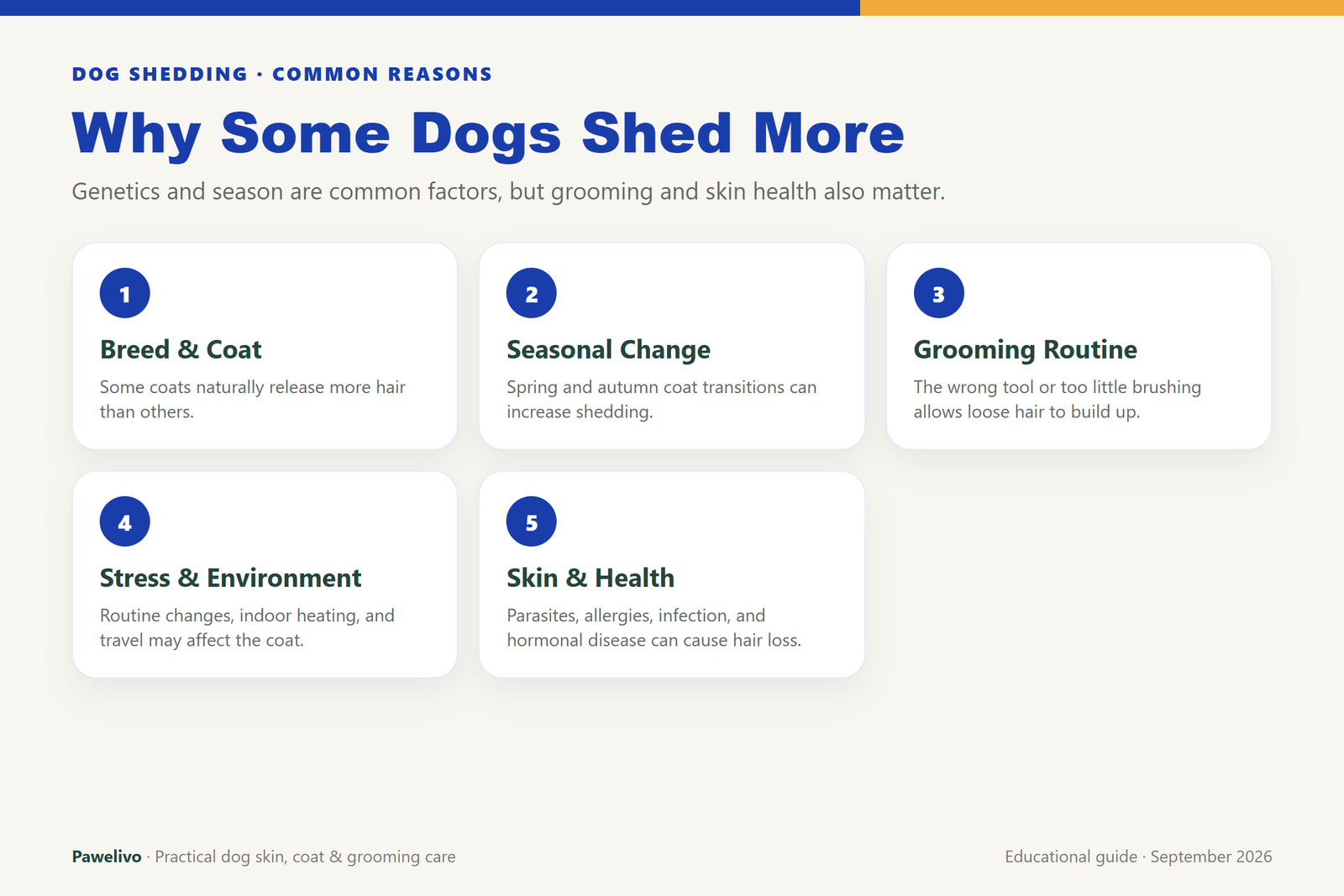
| Breed and coat type | Heavy shedding is typical for the breed | Use a suitable grooming routine |
| Seasonal coat change | More shedding in spring and autumn | Increase gentle brushing |
| Grooming routine | Loose hair builds up | Brush regularly with the right tool |
| Stress or environment | Changes in routine, indoor heating, travel | Reduce stress where possible and monitor the coat |
| Skin and health problems | Itching, redness, scabs, odor, bald patches | Contact a veterinarian |
What to check at home
- Is the shedding seasonal or year-round?
- Is the coat becoming thinner or are bald patches appearing?
- Is the skin red, itchy, scabby, or greasy?
- Is there an odor or discharge?
- Have brushing, bathing, food, or medication changed recently?
- Are flea, tick, and mite prevention products current?
Take photos and keep a simple record so your veterinarian can compare changes over time.
How to manage normal shedding
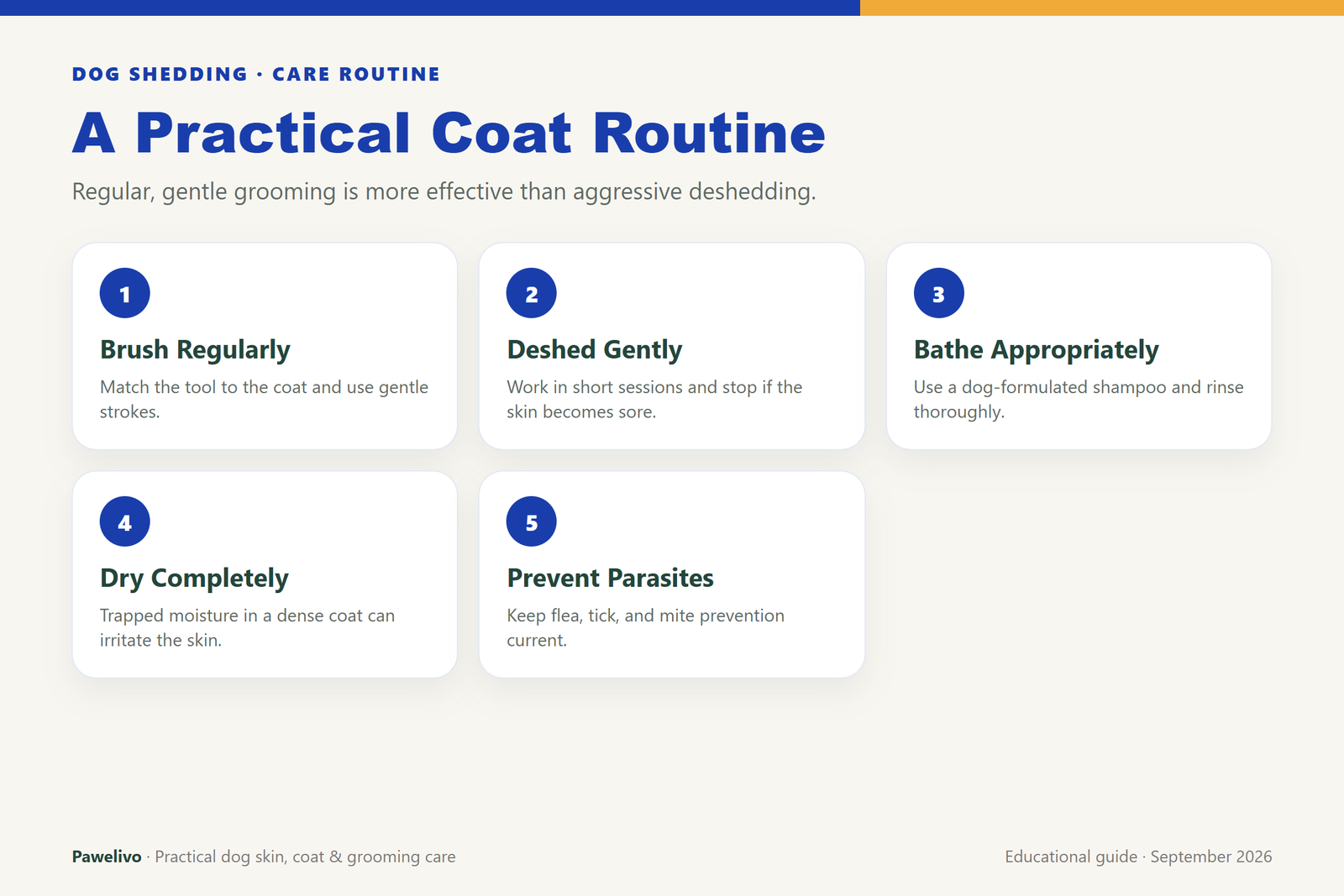
- Brush regularly. Match the tool to the coat and use gentle strokes.
- Use a deshedding routine. Work in short sessions and stop if the skin becomes sore.
- Bathe appropriately. Use a dog-formulated shampoo and rinse thoroughly.
- Dry the coat completely. Moisture trapped in a dense coat can irritate the skin.
- Keep parasite prevention current. Follow your veterinarian’s plan.
- Reduce household hair. Brush outdoors or in a dedicated area and wash bedding regularly.
What not to do
- Do not shave a double-coated dog to stop shedding unless a veterinarian or qualified groomer recommends it for a specific reason.
- Do not use harsh tools aggressively.
- Do not assume hair loss is normal when the skin also looks abnormal.
- Do not give supplements or change the diet without veterinary advice.
When to contact a veterinarian
Contact a veterinarian if your dog has bald patches or visible thinning, skin redness, itching, scabs, odor, hair coming out in clumps, changes in appetite or energy, or shedding that continues heavily outside the normal seasonal pattern.
Product types to discuss
| Product type | Purpose | Important note |
|---|---|---|
| Brush or comb | Remove loose hair | Choose based on coat type |
| Deshedding tool | Manage undercoat | Use gently and not too often |
| Dog shampoo and conditioner | Clean and support the coat | Follow label directions |
| Parasite prevention | Reduce skin pests | Use the product recommended for your dog |
FAQ
Is it normal for my dog to shed all year?
Some dogs shed year-round, especially indoors. The amount should still be interpreted alongside coat condition, skin health, breed, and season.
Does shaving stop shedding?
Shaving does not stop shedding and can affect coat regrowth and temperature regulation in some dogs. Do not shave a double-coated dog without professional advice.
Can food cause excessive shedding?
Diet can affect coat condition, but allergies, parasites, infection, and other health problems can also cause shedding or hair loss.
How often should I brush my dog?
It depends on coat type, shedding pattern, and lifestyle. Short, regular sessions are often better than long, aggressive brushing.
Does bathing reduce shedding?
Bathing can help remove loose hair when done appropriately, but it does not address the underlying cause of abnormal shedding.
When should I see a vet for shedding?
If you see bald patches, skin changes, itching, odor, or shedding that continues heavily outside the normal seasonal pattern.
Related guides
Sources
- Merck Veterinary Manual: Hair Loss (Alopecia) in Dogs
- Merck Veterinary Manual: Skin Disorders of Dogs
- AVMA: Grooming Tips for Dogs
- ASPCA: Dog Grooming Tips
This article is educational and does not replace veterinary advice. Last updated September 28, 2026.