
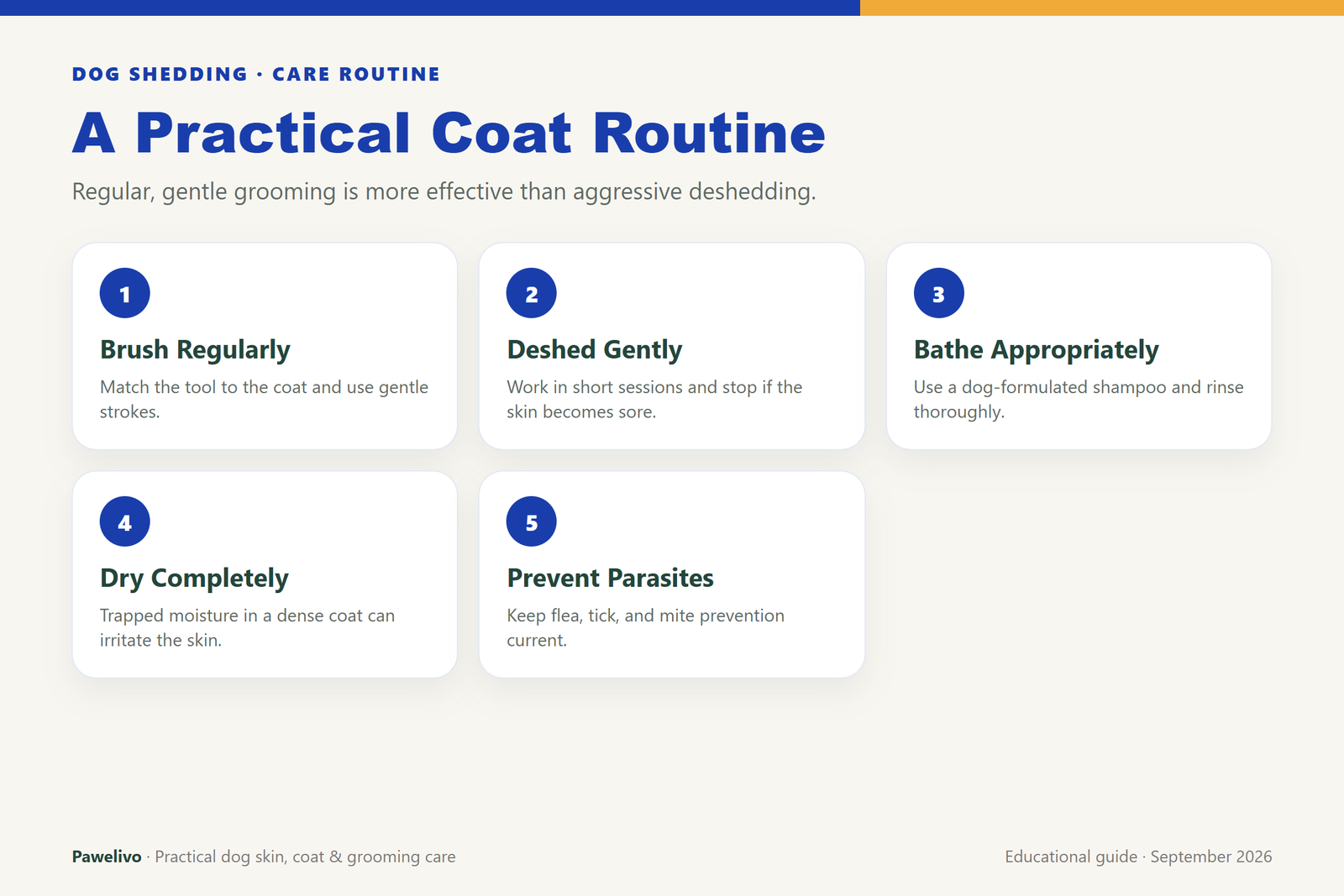
Quick answer: Deshedding removes loose undercoat and can reduce the amount of hair around the home, but it does not stop normal shedding. Use the right tool, work in short gentle sessions, and stop if the skin becomes red or painful. Do not shave a double-coated dog without professional advice.
Key takeaways
- Deshedding removes loose hair; it does not change how much hair a dog grows.
- Use tools matched to coat type and your dog’s comfort.
- Short, regular sessions are safer than aggressive grooming.
- Stop if the skin becomes red, tender, or damaged.
- Shaving is not a routine solution for double-coated dogs.
What does deshedding mean?
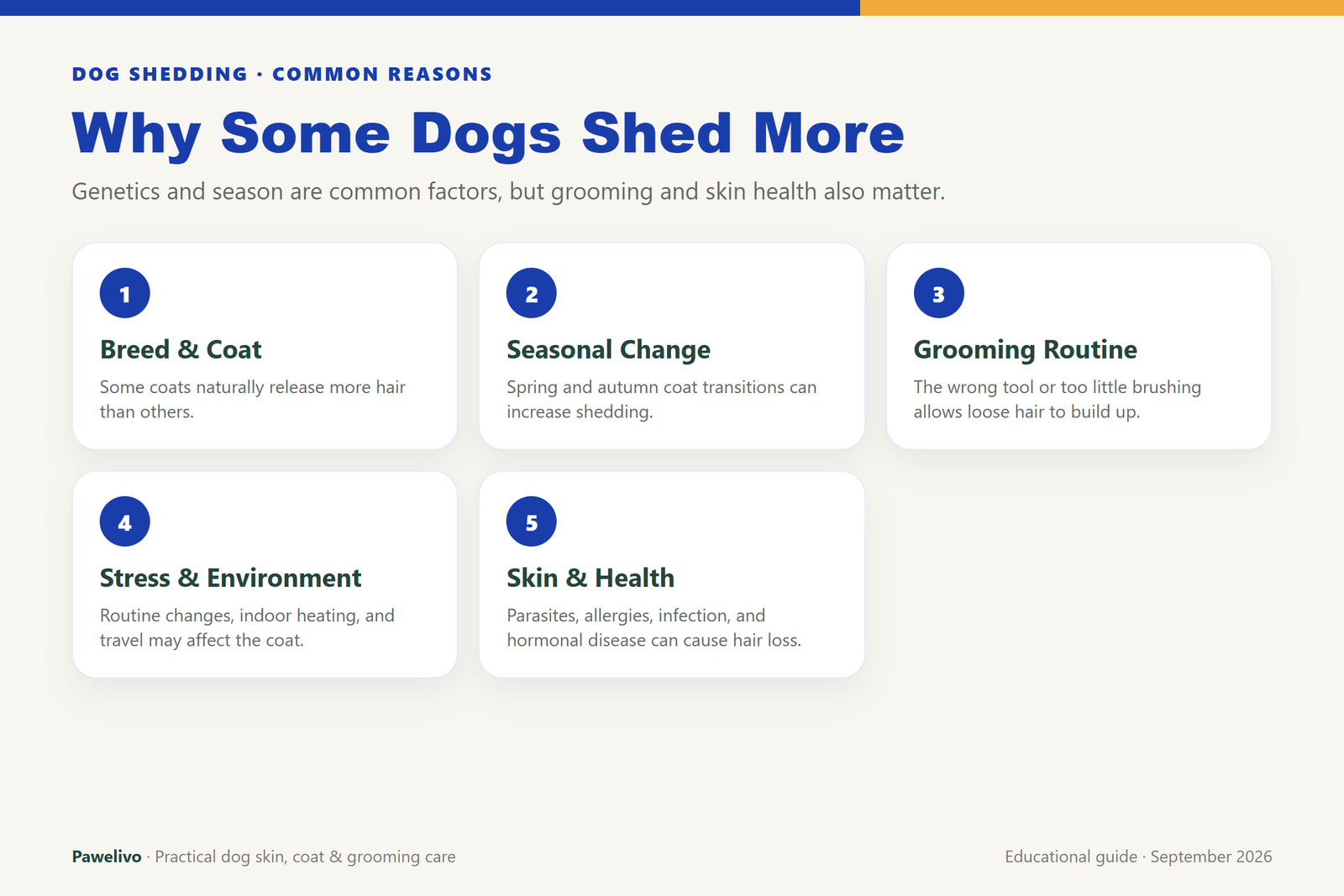
Deshedding is the process of removing loose undercoat and dead hair before it spreads through the home. It is different from shaving, and it is not a treatment for abnormal hair loss.
The safest approach depends on coat type. Short-coated dogs, double-coated dogs, and long-haired dogs need different tools and techniques.
Choose the right tool
| Tool | Best suited to | Important limitation |
|---|---|---|
| Slicker brush | Loose hair, tangles, and many medium coats | Can scratch if used with heavy pressure |
| Undercoat rake | Dense undercoat in double-coated breeds | Use gently and avoid overuse |
| Deshedding tool | Loose undercoat during heavy shedding | Can damage the coat if used too often or too aggressively |
| Comb | Checking for tangles and loose hair | May not remove dense undercoat alone |
| Grooming vacuum or blower | Removing loose hair in a controlled area | Noise and airflow can frighten some dogs |
How to deshed a dog step by step
- Start calm. Choose a quiet space and let your dog settle before grooming.
- Check the skin. Stop if you see redness, sores, scabs, swelling, or pain.
- Work in sections. Brush the back, sides, chest, and legs in the direction of hair growth.
- Use light pressure. Let the tool do the work instead of pressing toward the skin.
- Keep sessions short. Five to ten minutes may be enough, especially for sensitive dogs.
- Check the coat as you go. Look for tangles, thin areas, and skin irritation.
- Stop when the skin is uncomfortable. Never continue through redness, pain, or resistance.
- Clean up and reward. End calmly and remove loose hair from the grooming area.
How often should you deshed a dog?
There is no single frequency for every dog. A practical starting point is a short session once or twice a week, increasing during seasonal coat changes only if the skin remains healthy and your dog tolerates it.
Do not overuse a deshedding tool. More aggressive grooming is not automatically better and can damage the coat or skin.
What not to do
- Do not shave a double-coated dog to reduce shedding without professional advice.
- Do not press a rake or deshedding tool hard against the skin.
- Do not continue when your dog shows pain, fear, or skin irritation.
- Do not use deshedding as a substitute for treating allergies, parasites, or infection.
- Do not assume abnormal hair loss is just seasonal shedding.
When to contact a veterinarian
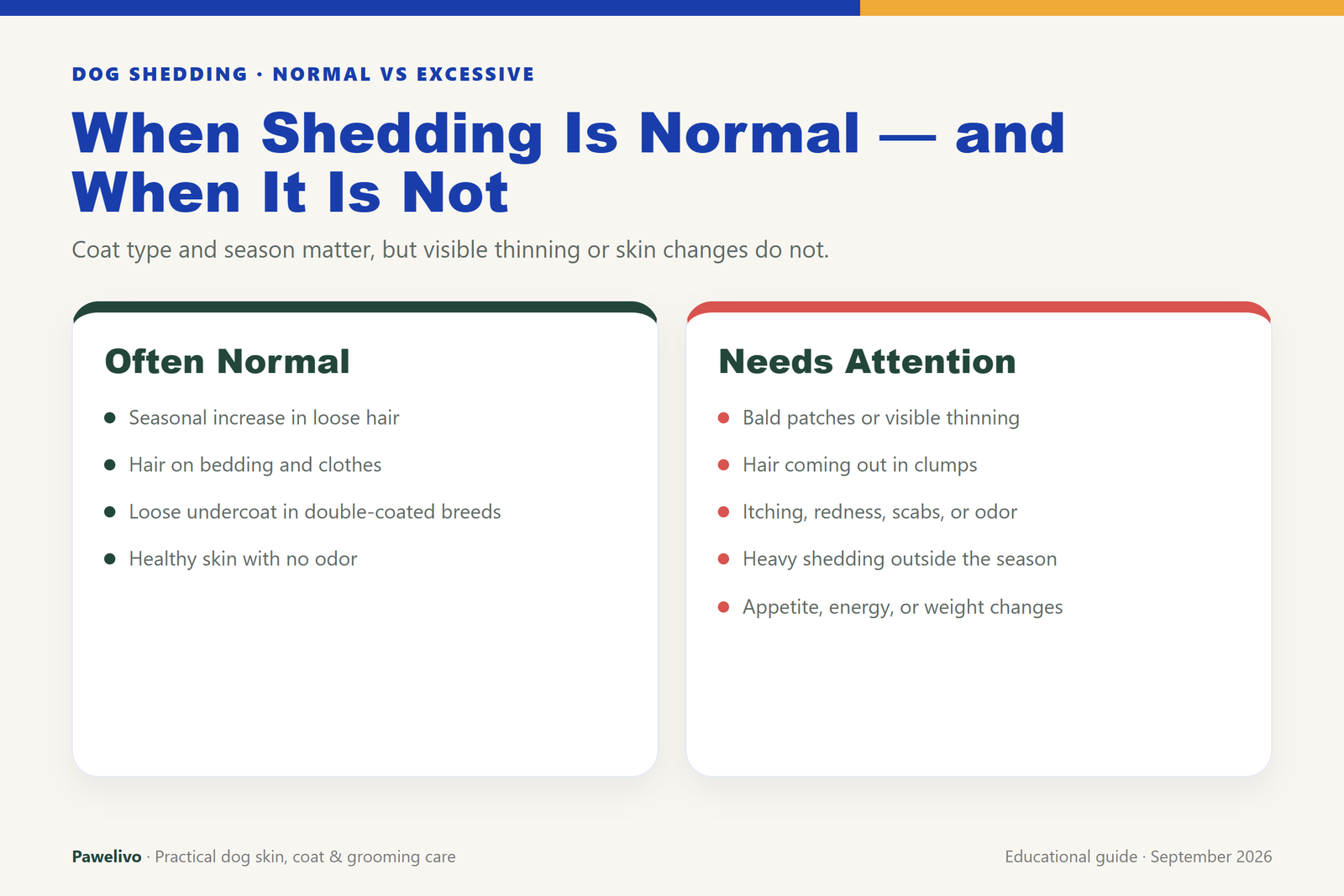
Contact a veterinarian if your dog has bald patches, visible thinning, hair loss with itching or redness, scabs, odor, or hair coming out in clumps. These signs are different from normal seasonal undercoat loss.
FAQ
Does deshedding stop shedding?
No. It removes loose hair and can reduce the amount around the home, but normal shedding continues.
Can I deshed my dog every day?
Some dogs tolerate frequent brushing, but deshedding tools should not be used aggressively every day. Follow your dog’s coat, comfort, and a professional groomer or veterinarian’s advice.
Is a deshedding tool safe for every coat?
No. Tool choice depends on coat type and skin condition. A tool that works for a double coat may be inappropriate for a short or fragile coat.
Should I shave my dog instead?
Shaving is not a routine fix for shedding and can affect coat regrowth and temperature regulation in some dogs. Ask a professional before shaving a double-coated dog.
Related guides
- Dog coat care guides
- Dog shedding topic guide
- How to brush a dog
- Best dog brush for shedding
- Grooming Schedule
Sources
- Merck Veterinary Manual: Hair Loss in Dogs
- AVMA: Grooming Tips for Dogs
- ASPCA: Dog Grooming Tips
- Pawelivo Editorial Policy
This article is educational and does not replace veterinary advice. Last updated September 29, 2026.