
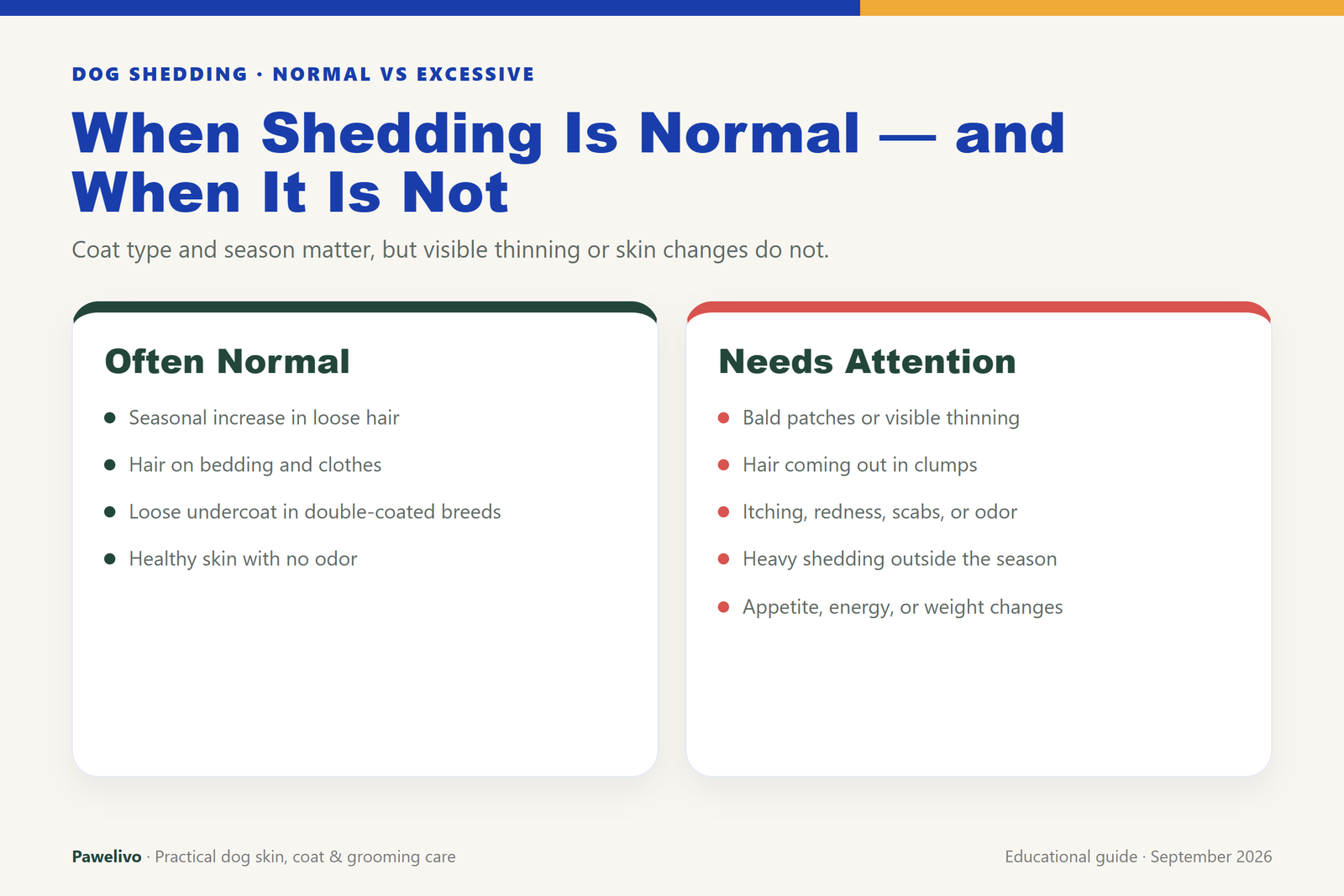
Quick answer: Double-coated dogs have a soft undercoat and a longer outer coat. Seasonal shedding can be heavy, especially in spring and autumn, but bald patches, visible thinning, itching, odor, or skin changes are not normal and should be evaluated by a veterinarian.
Key takeaways
- Double-coated dogs are bred for insulation, not for zero shedding.
- Undercoat loss can appear in large clumps during seasonal transitions.
- Regular gentle brushing removes loose hair and supports air flow through the coat.
- Shaving a double-coated dog can interfere with coat regrowth and temperature regulation.
- Hair loss with skin redness, odor, itching, or bald patches needs veterinary attention.
What is a double coat?
A double coat has two layers. The undercoat is soft, dense, and close to the skin. The outer coat is longer and helps protect the skin and regulate temperature.
Common double-coated breeds include Huskies, German Shepherds, Golden Retrievers, Labradors, and many other working and spitz-type breeds. Coat density varies by breed, age, health, and climate.
Why double-coated dogs shed so much
| Factor | What you may notice | What to do |
|---|---|---|
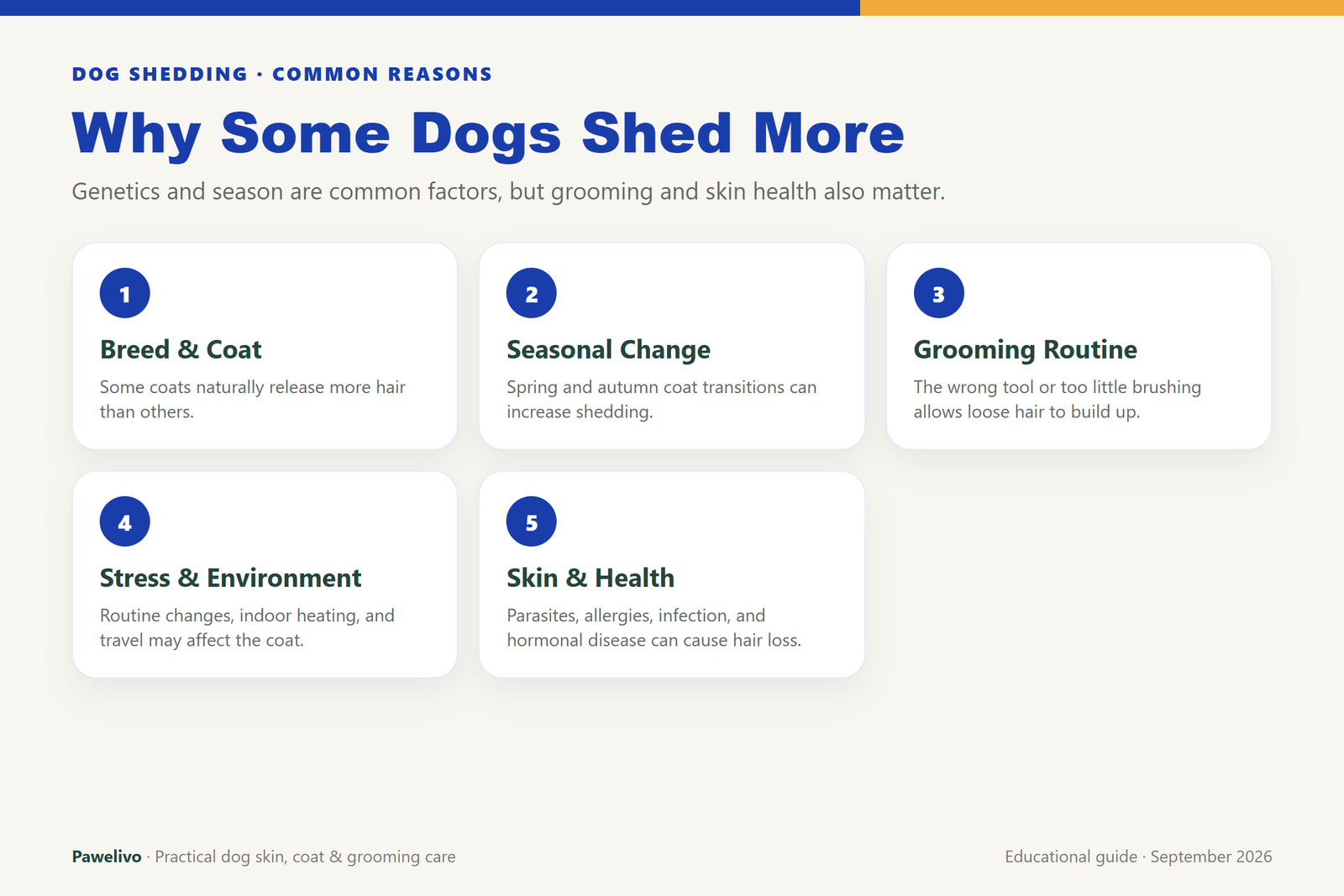
| Seasonal coat change | Large amounts of undercoat in spring or autumn | Increase gentle brushing and remove loose hair |
| Indoor climate | More consistent shedding because of heating and cooling | Maintain a regular grooming routine |
| Coat type and genetics | Some dogs naturally release more undercoat | Use tools suited to the coat |
| Grooming gaps | Loose hair builds up and mats | Brush in short, frequent sessions |
| Skin or health problem | Thinning, bald patches, odor, scabs, or itching | Contact a veterinarian |
Normal coat change vs abnormal hair loss
| Pattern | Often normal | Needs attention |
|---|---|---|
| Loose undercoat during seasonal change | Yes | If it continues heavily outside the usual season |
| Hair on bedding and flooring | Common | If the coat becomes visibly thin |
| Dense tufts that release with brushing | Common in double coats | If clumps come out with red or painful skin |
| Bald patches or obvious thinning | No | Needs veterinary evaluation |
| Shedding with itching, odor, or scabs | No | May indicate skin or health disease |
How to groom a double-coated dog
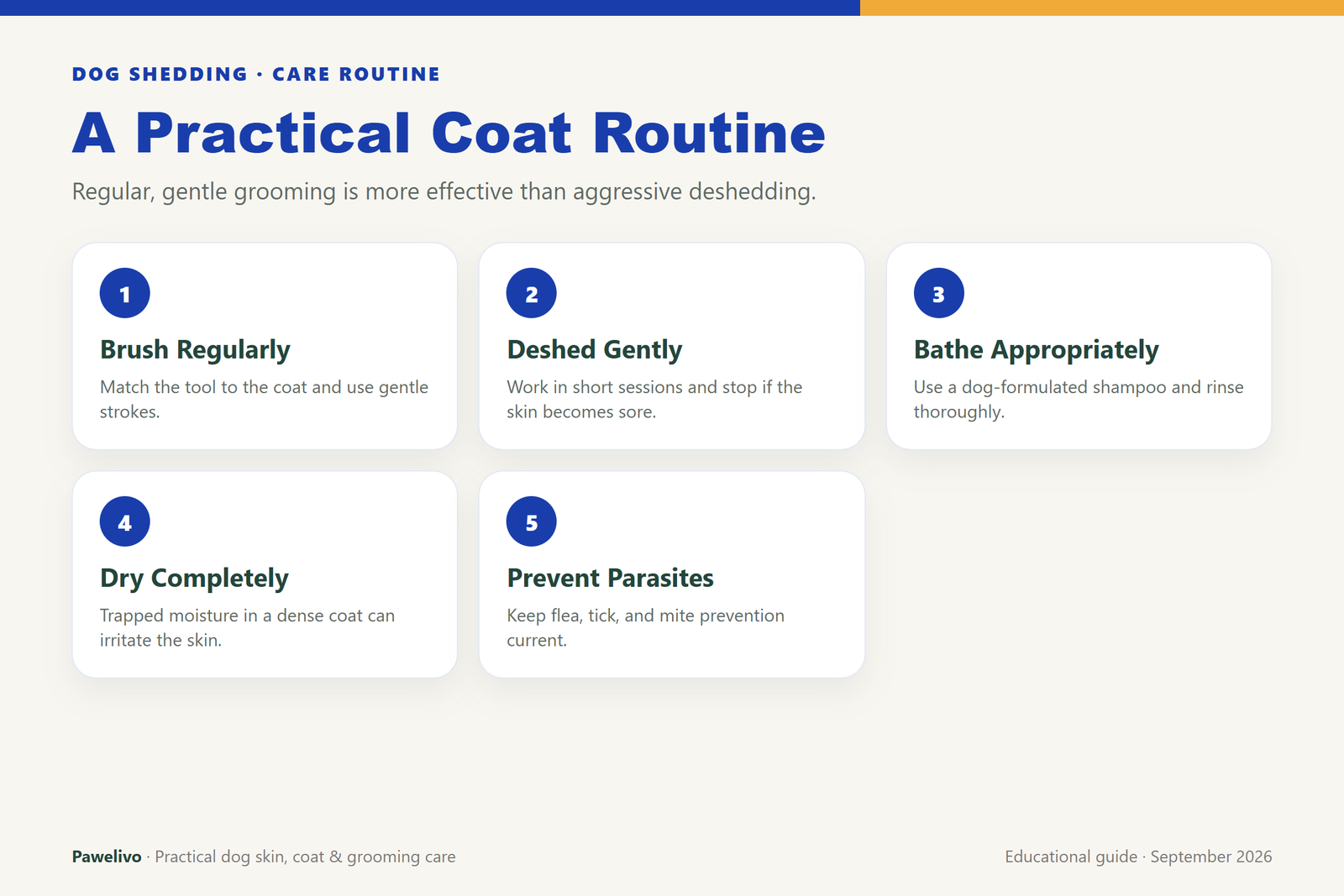
- Brush regularly. Short, frequent sessions are safer than long, aggressive grooming.
- Work in sections. Start at the back and work toward the head and legs, checking the skin as you go.
- Use the right tool. Choose a brush, comb, or undercoat rake suited to the coat and your dog’s tolerance.
- Use light pressure. Stop if the skin becomes red, painful, or irritated.
- Bathe appropriately. Use a dog-formulated shampoo and rinse thoroughly.
- Dry completely. Moisture trapped in a dense undercoat can irritate the skin.
- Do not shave routinely. Ask a veterinarian or qualified groomer before shaving a double-coated dog.
What not to do
- Do not shave the coat to stop shedding unless a professional recommends it for a specific medical reason.
- Do not use a deshedding tool aggressively or for long periods.
- Do not ignore bald patches, redness, odor, or hair loss.
- Do not give supplements or change the diet without veterinary guidance.
- Do not assume heavy shedding is normal when the skin also looks abnormal.
When to contact a veterinarian
Contact a veterinarian if the coat is visibly thinning, bald patches appear, hair comes out in clumps with skin changes, or your dog has itching, redness, scabs, odor, appetite changes, or reduced energy.
FAQ
Do double-coated dogs shed all year?
Many shed year-round, with heavier coat changes in spring and autumn. The amount should be interpreted alongside breed, skin health, and season.
Should I shave my double-coated dog in summer?
Do not shave routinely. The coat provides insulation and can protect the skin from sun and heat. Ask a veterinarian or qualified groomer about your dog’s specific needs.
How often should I brush a double-coated dog?
It depends on coat type, shedding pattern, and tolerance. Short sessions several times a week are often more effective than occasional intense grooming.
Can food reduce shedding?
Nutrition can affect coat condition, but allergies, parasites, infection, and other health problems can also cause hair loss or excessive shedding.
Related guides
- Dog coat care guides
- Dog shedding topic guide
- How to brush a dog
- Best dog brush for shedding
- Grooming Schedule
Sources
- Merck Veterinary Manual: Hair Loss in Dogs
- AVMA: Grooming Tips for Dogs
- ASPCA: Dog Grooming Tips
- Pawelivo Editorial Policy
This article is educational and does not replace veterinary advice. Last updated September 29, 2026.