Quick answer: Soothe dry, flaky dog skin by reducing harsh bathing, rinsing thoroughly, brushing gently, and using only dog-formulated products. Flaking can also be caused by allergies, parasites, infection, or another health problem, so persistent, painful, red, odorous, or worsening skin should be evaluated by a veterinarian.
Key takeaways
- Dry flakes are a symptom, not a complete diagnosis.
- Over-bathing, hot water, harsh shampoo, and incomplete rinsing can worsen irritation.
- Brush gently and never pick or scrub at irritated skin.
- Allergies, parasites, and infection can look like simple dryness.
- Persistent flakes, redness, odor, pain, or hair loss need veterinary attention.
Why does dry, flaky skin happen?
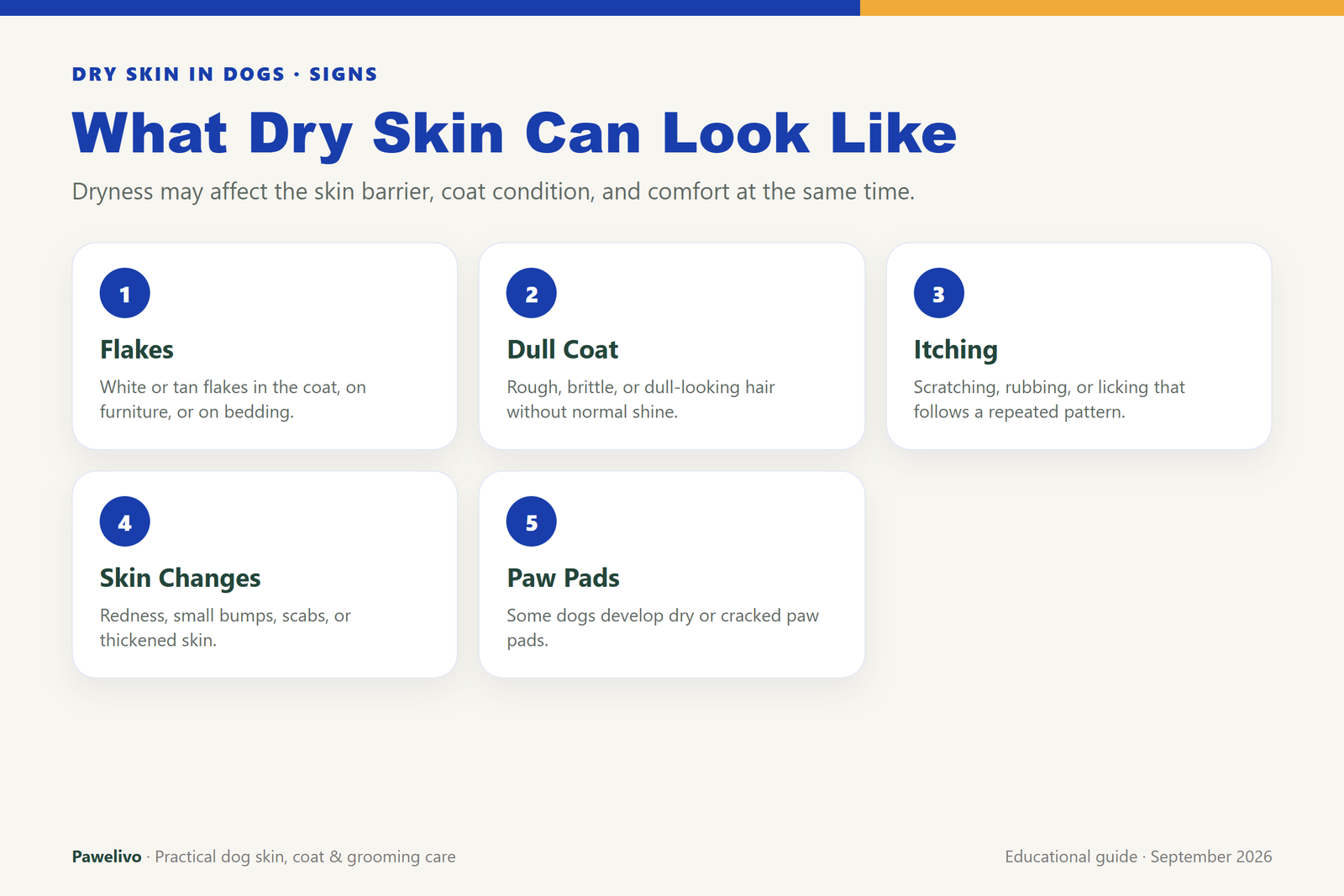
Flaking occurs when the outer layer of the skin is irritated, dry, inflamed, or renewing abnormally. In winter, indoor heating and low humidity can make normal dryness more noticeable. Grooming and bathing habits can have the same effect.
Some dogs also develop flakes because of:
- Environmental or food-related allergies.
- Parasites such as fleas or mites.
- Bacterial or yeast skin infections.
- Nutrition, hormonal, or other health problems.
- Contact irritation from shampoo, bedding, or household products.
Because the visible flakes can look similar, focus first on gentle care and observation rather than assuming the cause.
What to check at home
- Where are the flakes? Check the back, flanks, ears, face, paws, and skin folds.
- Is the skin itchy or painful? Note scratching, licking, rubbing, and changes in sleep.
- Are there other changes? Look for redness, scabs, bumps, odor, moisture, or hair loss.
- What changed recently? Record new food, shampoo, conditioner, bedding, detergent, or medication.
- What is the bathing routine? Note water temperature, shampoo, contact time, rinsing, and drying.
Normal flakes vs a problem that needs attention
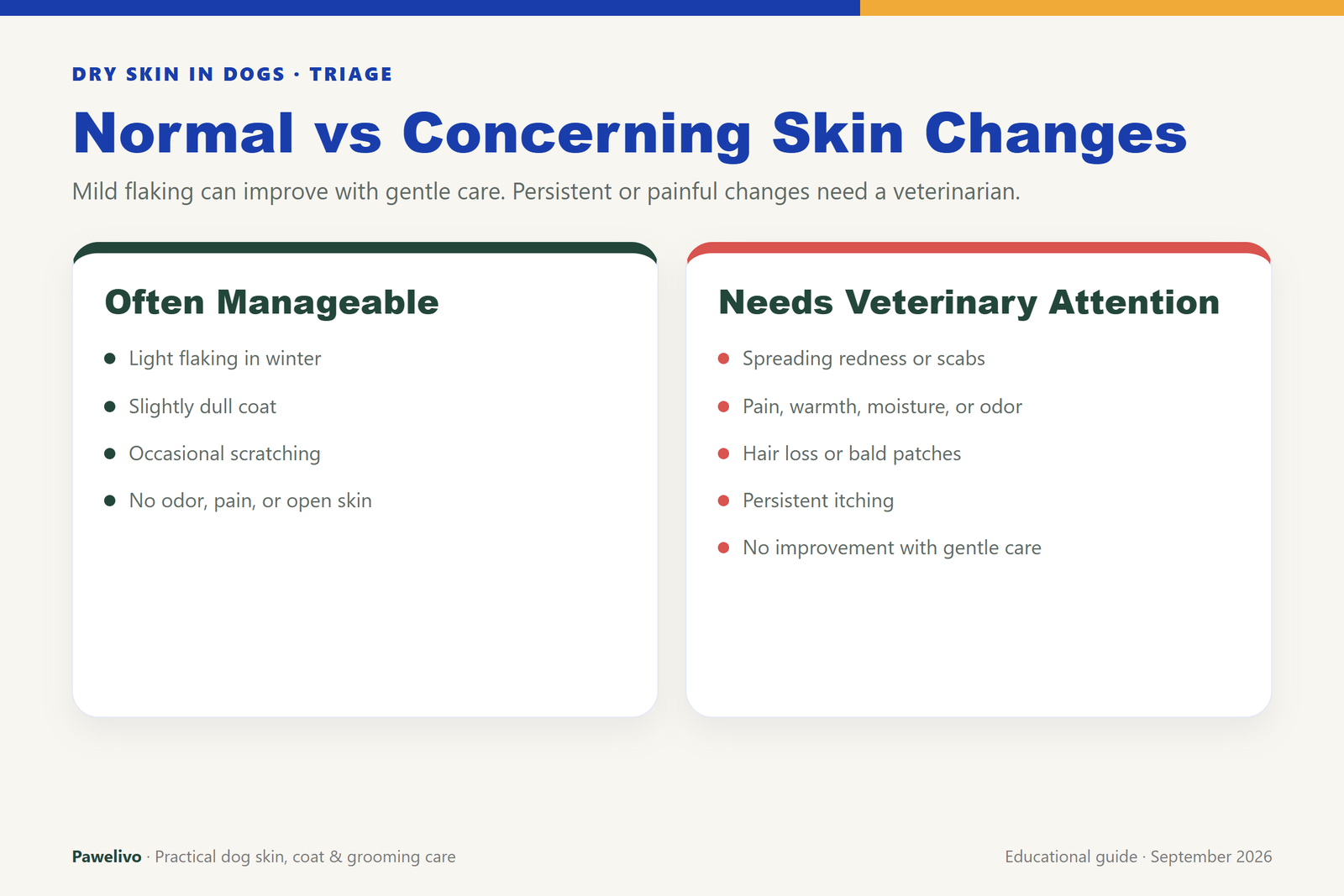
| Pattern | May be manageable | Needs veterinary attention |
|---|---|---|
| Light flakes in dry weather | Often mild | If they persist, spread, or itch |
| Dull coat | Possible grooming or nutrition factor | If accompanied by weight, appetite, or energy changes |
| Occasional scratching | May be mild irritation | If frequent, severe, or disturbing sleep |
| Redness or scabs | Not routine | If painful, warm, moist, or spreading |
| Odor or greasy flakes | Not routine | May indicate infection or seborrheic disease |
How to soothe dry, flaky skin safely
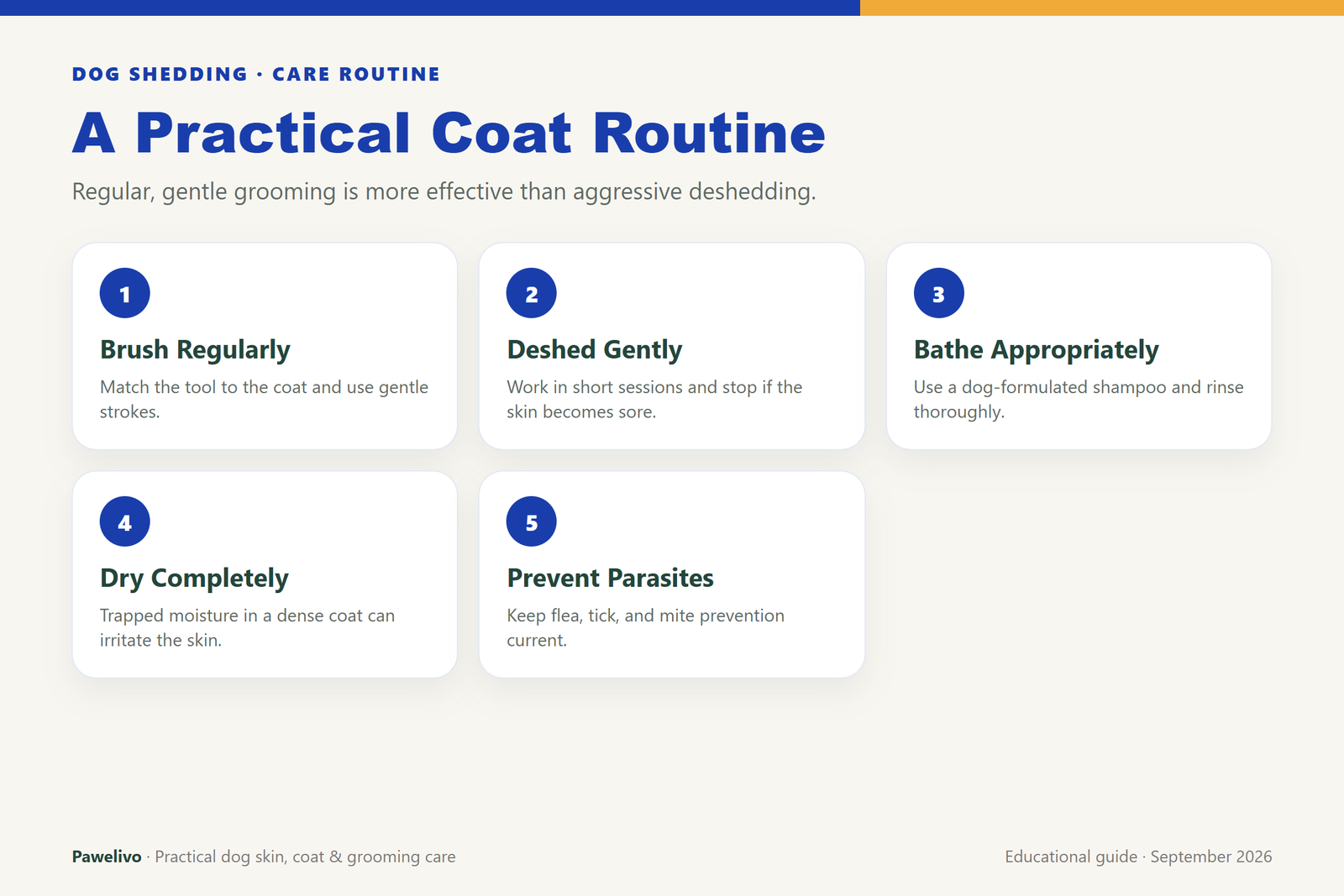
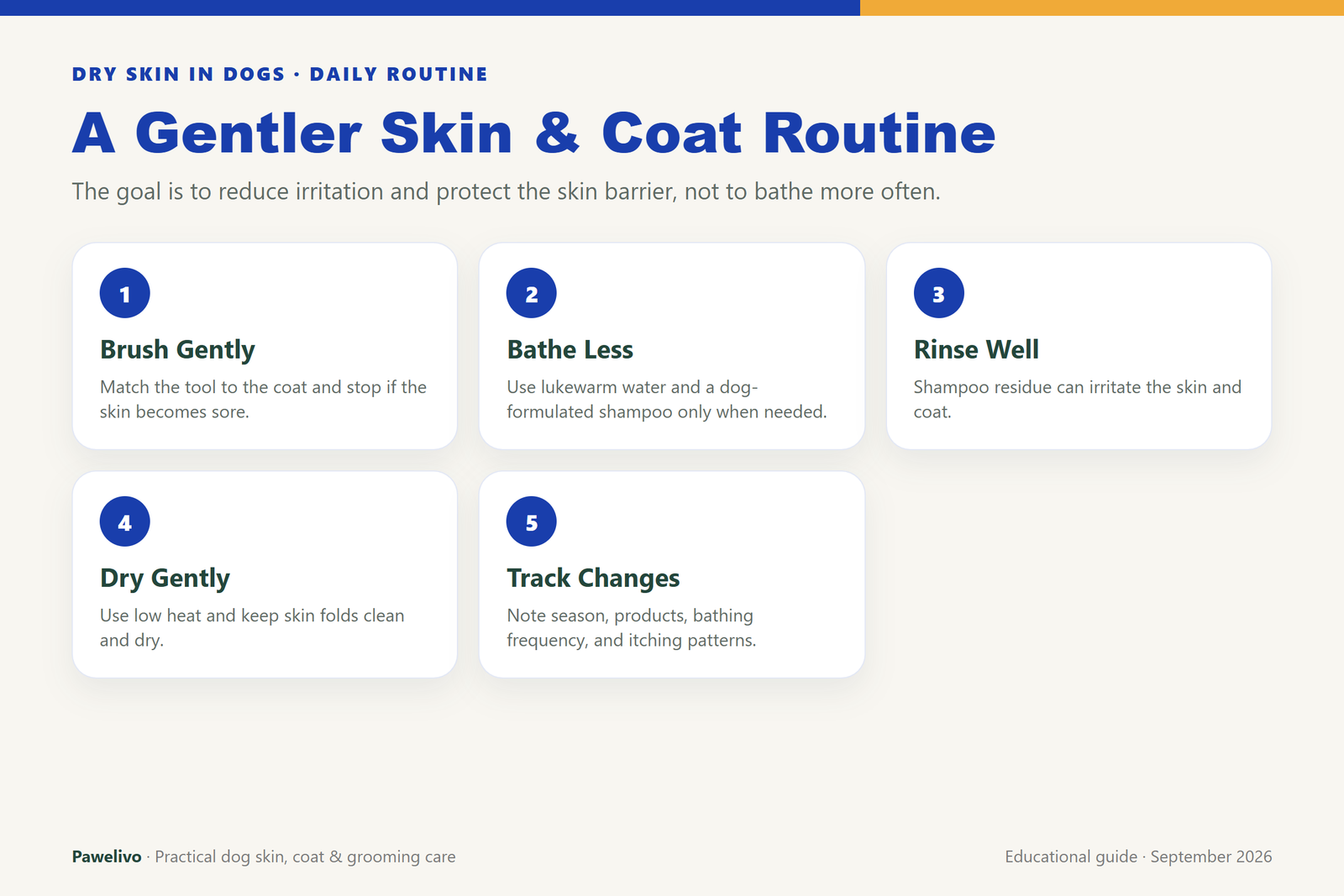
- Reduce bathing frequency. Bathe only when needed unless a veterinarian gives a different plan.
- Use lukewarm water. Hot water can strip oils and increase irritation.
- Choose a gentle dog shampoo. Follow the label and avoid products with strong fragrance if the skin is reactive.
- Rinse completely. Residue can leave the coat dull and irritate the skin.
- Dry gently. Use a towel or low-heat dryer and keep skin folds dry.
- Brush with a soft tool. Remove loose hair without scraping the skin.
- Protect the skin barrier. Reduce harsh cleaners, fragrances, and repeated wetting.
- Track the response. Keep a simple record of products, bathing dates, and visible changes.
What not to do
- Do not use human shampoo, dish soap, or heavily fragranced products.
- Do not apply human lotions, essential oils, or homemade mixtures.
- Do not use medicated shampoo without a diagnosis or label instructions.
- Do not scrub, pick, or repeatedly wet irritated skin.
- Do not assume every flake is simple dryness.
When to contact a veterinarian
Contact a veterinarian if flakes persist or spread, the skin is red, painful, swollen, oozing, or foul-smelling, your dog is losing hair, or itching interferes with rest and daily life.
Seek prompt care for severe swelling, open wounds, breathing difficulty, collapse, or another emergency sign.
FAQ
Can I use coconut oil on dry, flaky dog skin?
Do not apply oils or human products unless a veterinarian recommends them. Some products can irritate the skin or cause digestive problems if licked.
How often should I bathe a dog with flaky skin?
There is no universal schedule. Bathe less aggressively, use a gentle dog-formulated shampoo, and follow veterinary advice if the skin is inflamed.
Does flaky skin always mean dry skin?
No. Allergies, parasites, infection, and other skin diseases can also cause flakes.
Will changing food fix the problem?
Diet can affect coat condition, but food changes should be planned with a veterinarian and should not replace evaluation of other causes.
Related guides
Sources
- Merck Veterinary Manual: Skin Disorders of Dogs
- Merck Veterinary Manual: Itching in Dogs
- AVMA: Grooming Tips for Dogs
- ASPCA: Dog Grooming Tips
This article is educational and does not replace veterinary advice. Last updated September 29, 2026.