Quick answer: Dandruff is visible flaking of the skin, and it can be dry, oily, or a sign of parasites, allergies, infection, or another skin problem. Gentle grooming and dog-formulated bathing products can help mild flaking, but persistent, itchy, red, odorous, or painful skin should be evaluated by a veterinarian.
Key takeaways
- Dandruff is a sign, not a diagnosis.
- Flakes may be dry or oily, and they may or may not itch.
- Over-bathing, harsh shampoo, parasites, allergies, and infection can all contribute.
- Use dog-formulated products and follow label directions.
- Persistent scales, redness, odor, hair loss, or discomfort need veterinary attention.
What does dog dandruff look like?
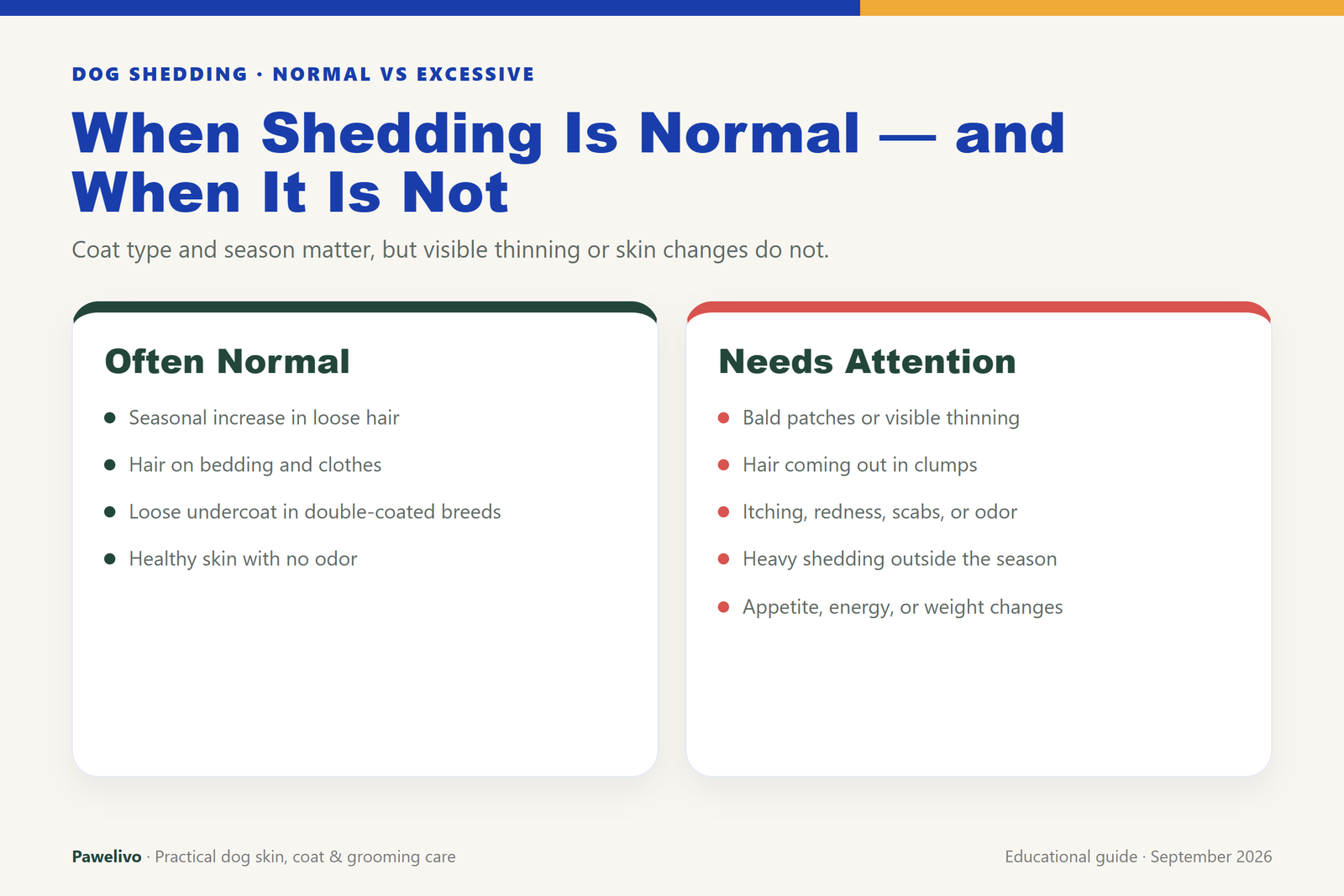
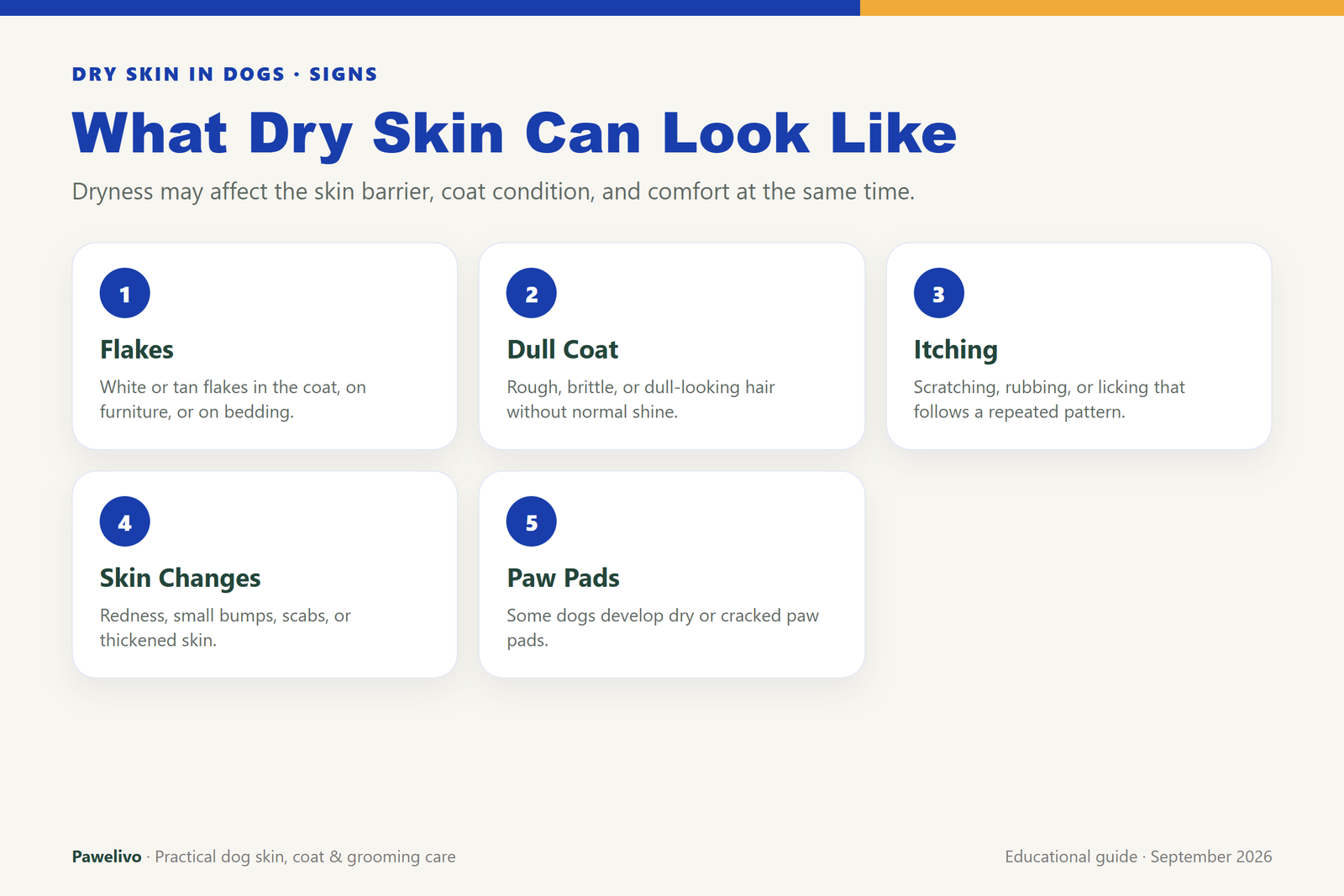
- White, tan, or gray flakes in the coat, on bedding, or on furniture.
- Dry, rough, or dull-looking coat.
- Greasy scales, oily skin, or a strong odor.
- Scratching, rubbing, licking, or chewing.
- Redness, bumps, scabs, thickened skin, or hair loss.
Common causes of dandruff in dogs
| Cause | What you may notice | Next step |
|---|---|---|
| Dry environment or grooming | Fine flakes, dull coat, no severe itching | Reduce harsh bathing and support gentle coat care |
| Over-bathing or harsh products | Dryness, irritation, or a brittle coat | Use a gentle dog-formulated shampoo less aggressively |
| Parasites | Scratching, flakes, redness, or visible skin pests | Follow the parasite plan recommended for your dog |
| Allergies | Seasonal or year-round itching, licking, ear problems | Track triggers and ask a veterinarian about evaluation |
| Bacterial or yeast infection | Odor, greasy scales, redness, moisture, thickened skin | Needs veterinary diagnosis and treatment |
| Nutrition or health problem | Dull coat with weight, appetite, or energy changes | Ask a veterinarian to assess the whole picture |
Dry dandruff vs oily dandruff
| Pattern | What it may look like | Important note |
|---|---|---|
| Dry flakes | Fine white or tan scales, dry coat | Can be caused by environment, grooming, or skin disease |
| Oily scales | Greasy, yellowish, or odorous flakes | May be associated with infection or seborrheic disease |
| Flakes with intense itching | Scratching, redness, and hair loss | Allergies, parasites, and infection must be considered |
Safe grooming and bathing steps
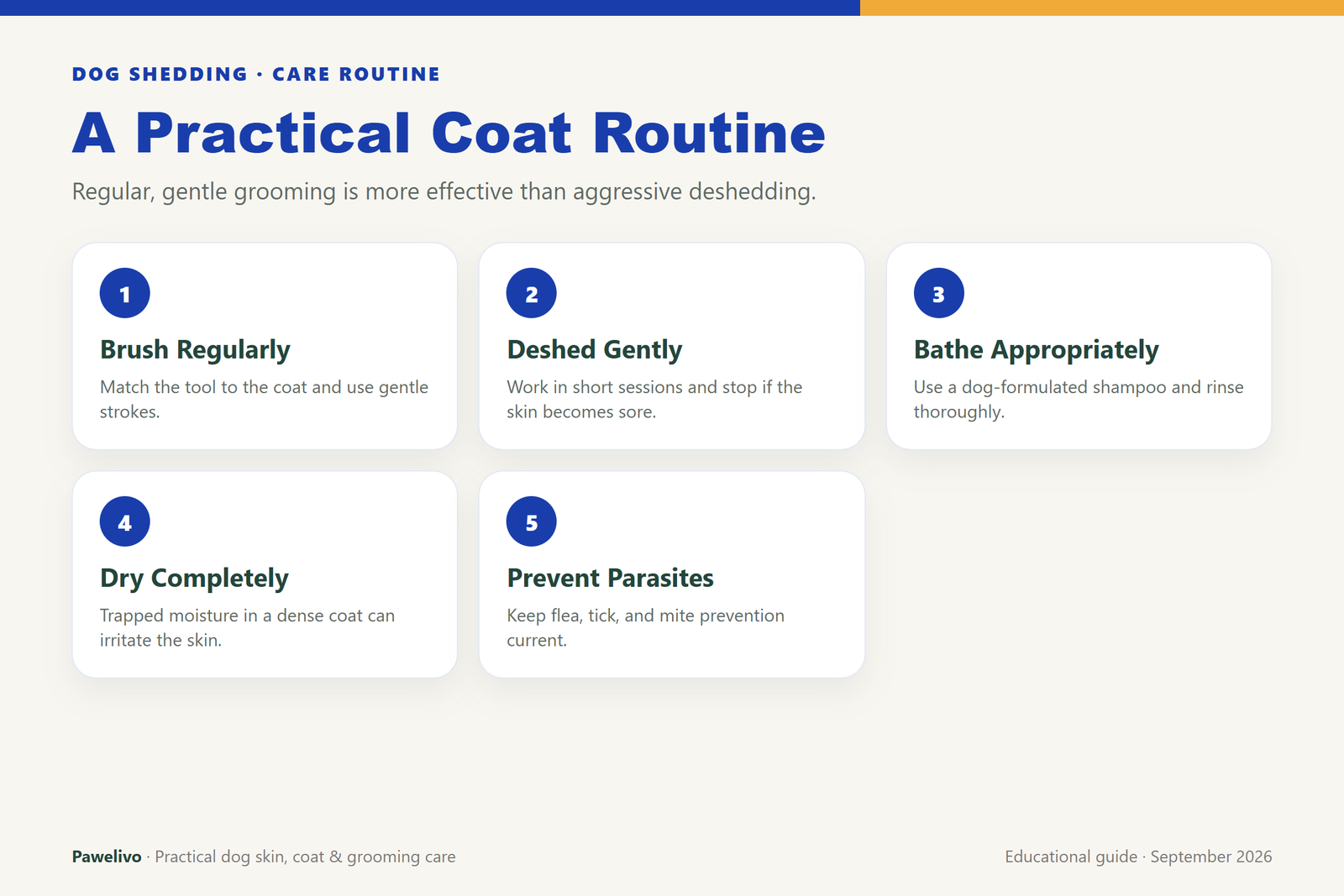
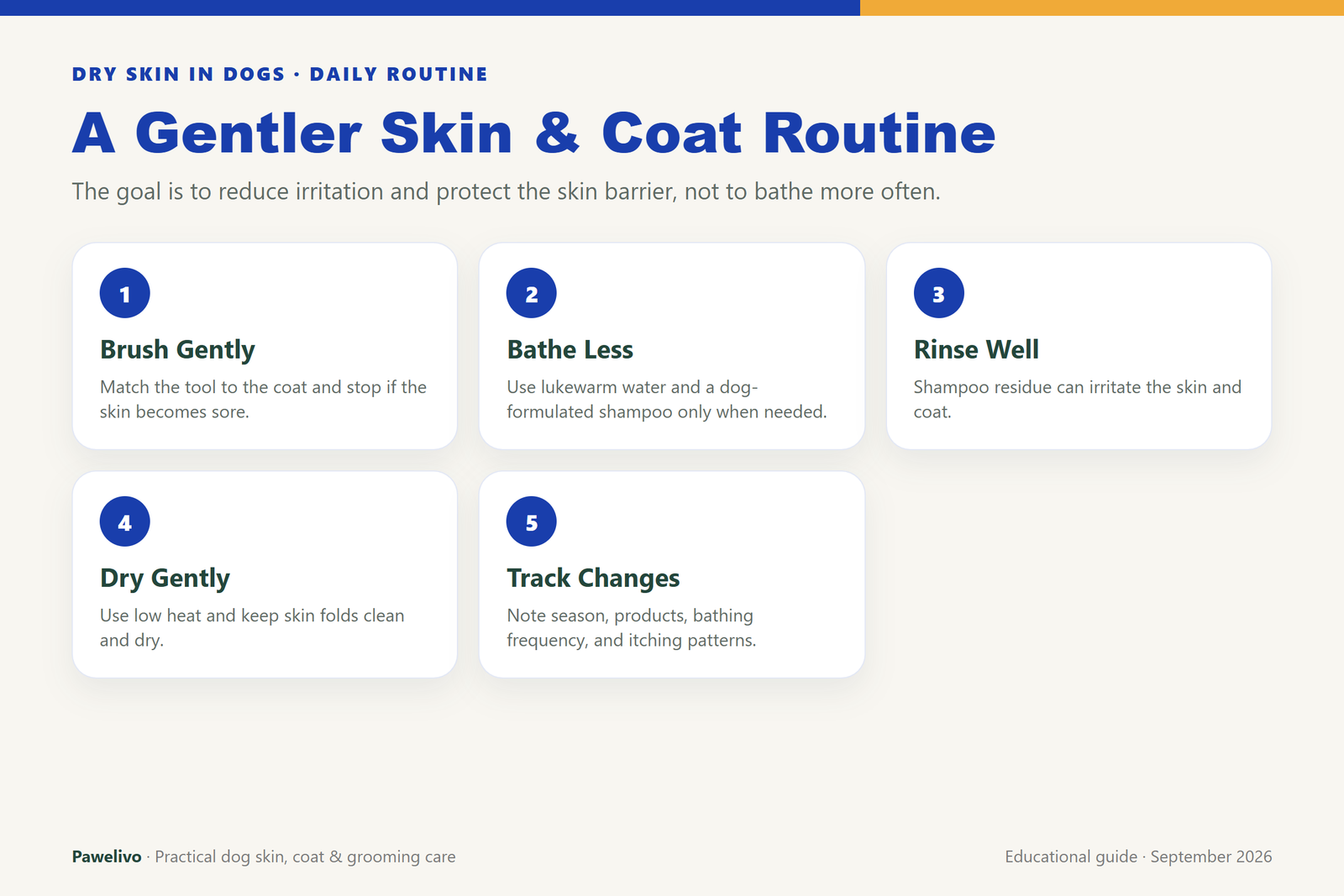
- Brush gently. Remove loose hair and distribute natural oils without scraping the skin.
- Choose the right shampoo. Use a dog-formulated product that matches your dog’s skin and coat needs.
- Follow the contact time. If the label requires several minutes, follow it exactly.
- Rinse thoroughly. Shampoo residue can worsen flaking and irritation.
- Dry completely. Moisture trapped in a dense coat can irritate the skin.
- Do not over-bathe. More frequent bathing is not always better unless a veterinarian recommends it.
- Track the response. Note the product, date, bathing frequency, and changes in flakes or itching.
Product types to discuss
- Gentle dog shampoo for routine cleansing.
- Veterinarian-recommended medicated shampoo when infection or seborrheic disease is suspected.
- Conditioner only when it suits the coat and does not leave heavy residue.
- Parasite prevention appropriate for your dog and local risk.
What not to do
- Do not use human shampoo, dish soap, or heavily fragranced products.
- Do not apply human lotions, oils, or essential oils to the skin.
- Do not use medicated shampoo without a diagnosis or label instructions.
- Do not assume flakes are only dry skin when infection or parasites may be present.
- Do not shave a double-coated dog to treat dandruff.
When to contact a veterinarian
Contact a veterinarian if your dog has persistent or spreading flakes, intense itching, redness, scabs, odor, moisture, hair loss, pain, or a coat change that does not improve with gentle care.
FAQ
Is dog dandruff contagious?
Some causes, such as certain parasites, can spread between animals. Other causes, such as dry skin or allergies, do not. A veterinarian can determine the cause.
Can I use human dandruff shampoo on my dog?
Do not use human shampoo unless a veterinarian specifically recommends it. Ingredients and pH are designed for people, not dogs.
How often should I bathe a dog with dandruff?
It depends on the cause and product. Follow the label and veterinary advice rather than using a fixed schedule for every dog.
Does dandruff always mean dry skin?
No. Oily scales, parasites, allergies, infections, and other skin diseases can also cause dandruff.
Related guides
- Dog skin care guides
- Dog dandruff topic guide
- How to bathe a dog
- Best dog shampoo guide
- Dog Skin & Coat Quiz
Sources
- Merck Veterinary Manual: Skin Disorders of Dogs
- Merck Veterinary Manual: Seborrhea in Dogs
- AVMA: Grooming Tips for Dogs
- ASPCA: Dog Grooming Tips
This article is educational and does not replace veterinary advice. Last updated September 28, 2026.