
Quick answer: Itching in dogs can be caused by parasites, allergies, skin infections, irritants, dry skin, or other medical conditions. You can check the skin, record when and where your dog scratches, and use gentle dog-safe care. Persistent, severe, painful, or worsening itching should be evaluated by a veterinarian.
Key takeaways
- Itching is a symptom, not a diagnosis.
- Fleas, mites, allergies, infections, and irritants can all look similar at first.
- The pattern of itching can help your veterinarian narrow down the cause.
- Do not use human creams, essential oils, or leftover medication without veterinary advice.
- Open sores, hair loss, odor, pain, or rapid worsening need veterinary attention.
Who this guide is for
This guide is for dog owners who want to understand common causes of itching, record useful observations, and decide when to seek professional help.
It is not a diagnostic tool and does not replace an examination by a veterinarian.
Normal vs concerning itching
| Situation | What it may mean | What to do |
|---|---|---|
| Occasional scratching after a walk or grooming | Mild irritation or normal grooming behavior | Check the skin and monitor |
| Itching at night or after meals | Possible allergy pattern or environment trigger | Record timing and contact a vet if it continues |
| Frequent licking of paws, ears, or belly | Possible allergy, infection, or irritation | Book a veterinary evaluation |
| Redness, scabs, odor, moisture, or hair loss | Possible infection or skin disease | Contact a veterinarian |
| Severe itching, pain, swelling, or open skin | Needs professional assessment | Seek veterinary care promptly |
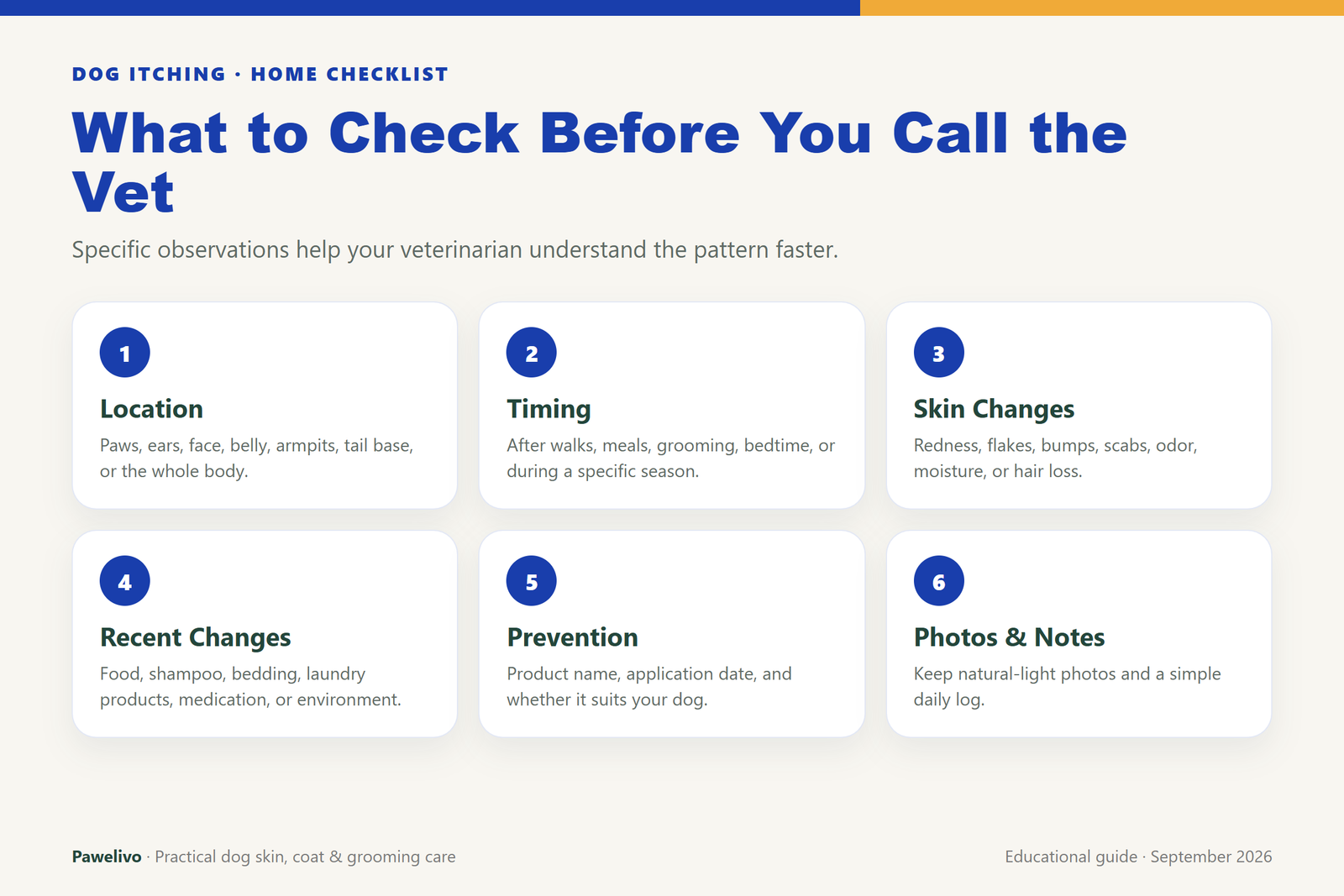
Common causes of itching in dogs
| Cause | What you may notice | Next step |
|---|---|---|
| Fleas, mites, or other parasites | Scratching around the tail base, ears, or paws; visible parasites or bites | Follow the parasite-prevention plan recommended for your dog |
| Environmental allergies | Seasonal or year-round itching, paw licking, face rubbing | Track triggers and discuss testing or treatment with a vet |
| Food allergy or sensitivity | Persistent itching, digestive signs, or recurring skin problems | Do not change the diet randomly; ask about a structured elimination trial |
| Skin infection | Odor, greasy skin, redness, crusts, thickened skin | Needs veterinary diagnosis and appropriate treatment |
| Dry skin or irritants | Flakes, dull coat, itching after bathing or cold weather | Reduce harsh products and support the skin barrier |
| Other medical conditions | Itching with weight, appetite, energy, or coat changes | Ask a veterinarian to assess the whole picture |
What to check at home
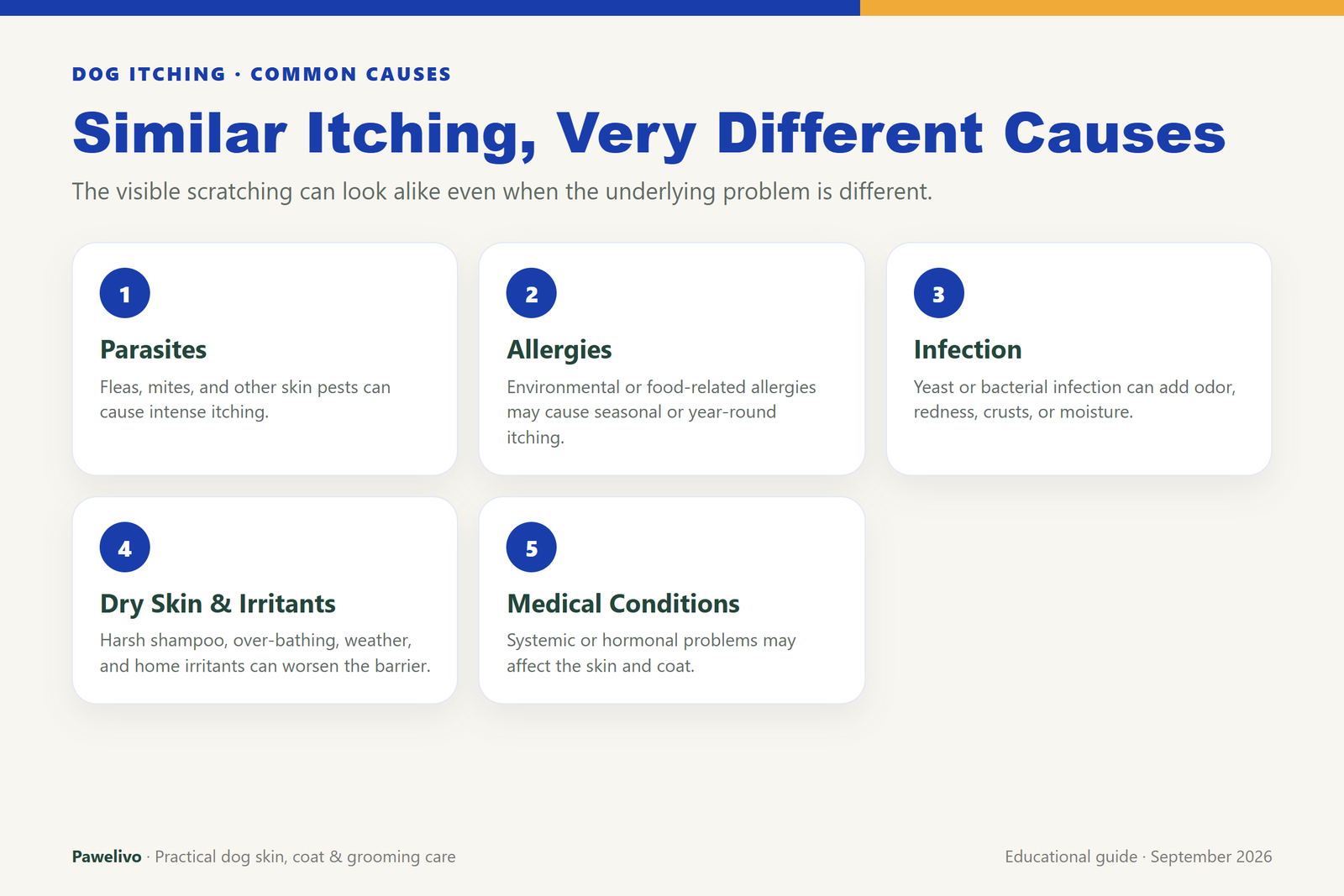
- Location: paws, ears, face, belly, armpits, tail base, or whole body.
- Timing: after walks, meals, grooming, bedtime, or during a particular season.
- Skin changes: redness, flakes, bumps, scabs, odor, moisture, or hair loss.
- Recent changes: food, shampoo, bedding, laundry products, medication, or environment.
- Parasite prevention: product name, application date, and whether it is appropriate for your dog.
- Photos: take clear photos in natural light and keep a simple daily log.
Safe everyday care steps
- Keep the affected area clean and dry without scrubbing.
- Use only a dog-formulated shampoo when bathing.
- Rinse thoroughly and dry gently, especially in skin folds.
- Prevent excessive licking when possible.
- Continue flea, tick, and mite prevention exactly as directed.
- Do not stop or change prescription treatment without veterinary advice.
What not to do
- Do not use human shampoo, dish soap, or heavily fragranced products.
- Do not apply human creams, essential oils, or ointments unless a veterinarian recommends them.
- Do not use leftover antibiotics, steroids, or anti-itch medication.
- Do not repeatedly bathe with medicated shampoo without instructions.
- Do not assume every itching problem is a food allergy.
When to contact a veterinarian
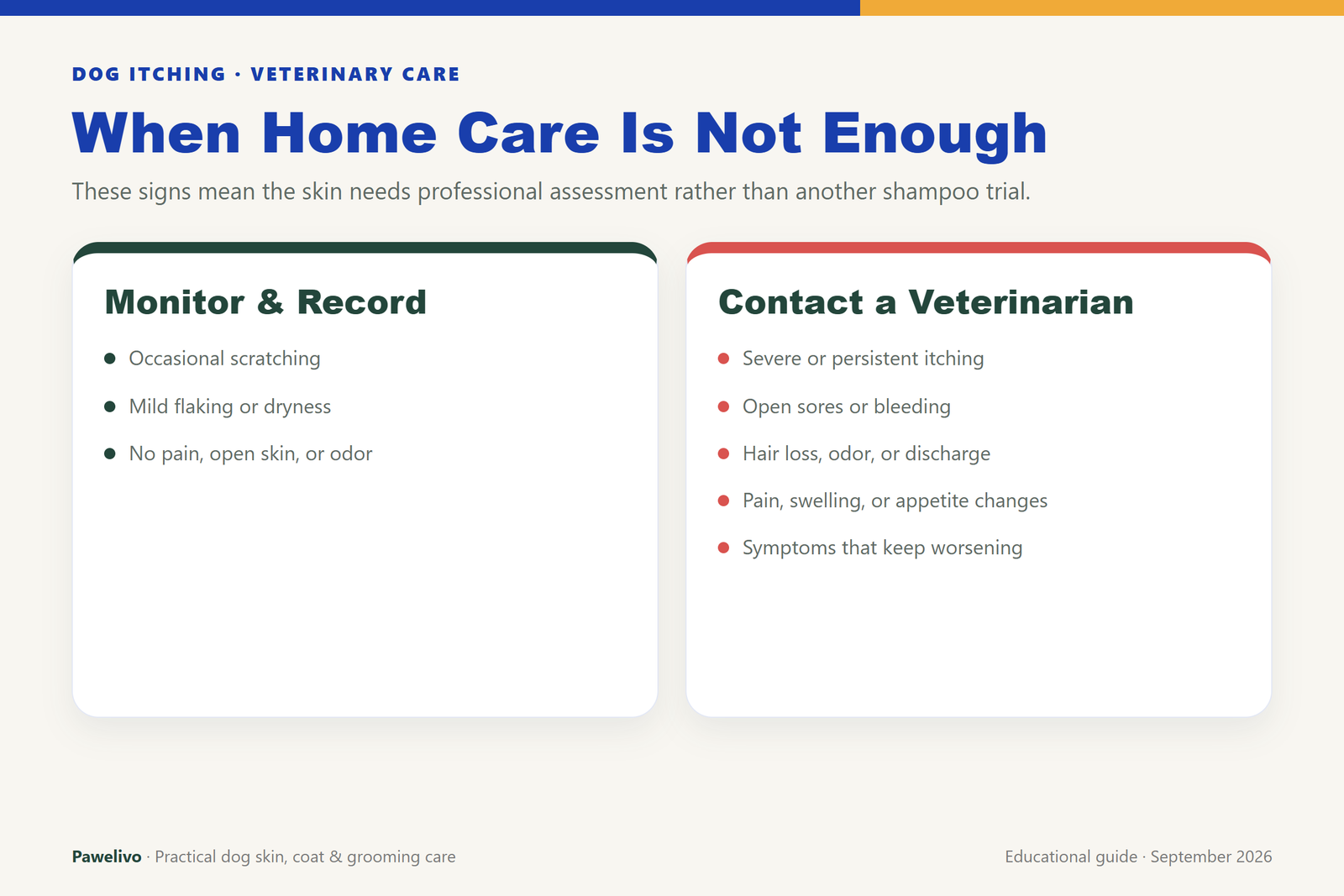
Contact a veterinarian if your dog has persistent or severe itching, open sores, major redness or swelling, hair loss, bad odor, discharge, pain, or symptoms that keep getting worse.
For breathing difficulty, collapse, severe swelling, or another emergency sign, seek immediate veterinary care.
Product types you may discuss with your veterinarian
| Product type | Purpose | Important note |
|---|---|---|
| Gentle dog shampoo | Routine cleansing | Follow label directions and rinse well |
| Parasite prevention | Reduce fleas, ticks, and mites | Use the product recommended for your dog |
| Veterinary treatment | Treat infection, allergy, or inflammation | Requires an appropriate diagnosis |
| Skin-supportive care | Support the skin barrier | Use only when it fits the treatment plan |
FAQ
Can I use human anti-itch cream on my dog?
Do not use human creams or ointments unless a veterinarian specifically recommends one.
Does itching always mean allergies?
No. Parasites, infections, dry skin, irritants, and other conditions can cause itching.
Should I change my dog’s food right away?
No. Food changes should be planned with a veterinarian, especially if an elimination diet is being considered.
Can oatmeal shampoo cure itching?
Oatmeal shampoo may help cleanse and soothe some dogs, but it does not diagnose or cure the underlying cause.
How often should I bathe an itchy dog?
There is no single schedule for every dog. Follow your veterinarian’s advice and the product label.
When should I stop home care and see a vet?
If itching is persistent, severe, painful, or accompanied by skin damage, hair loss, odor, or behavior changes.
Related guides
Sources
- Merck Veterinary Manual: Itching (Pruritus) in Dogs
- Merck Veterinary Manual: Skin Disorders of Dogs
- AVMA: Pet Owner Resources
- ASPCA: Dog Grooming Tips
This article is educational and does not replace veterinary advice. Last updated September 28, 2026.